Showing posts with label police brutality. Show all posts

Thursday, December 11, 2014

Phoenix cops chase down fleeing white guy with weapon and drugs, don't kill him

Did you notice? Maybe not because only one news outlet covered this seemingly unremarkable story. Yesterday the Phoenix police apprehended a man they accused of a set of crimes that ought to sound very familiar to you if you've been following the local case of Rumain Brisbon, an unarmed black man shot dead by Phoenix Police last week.

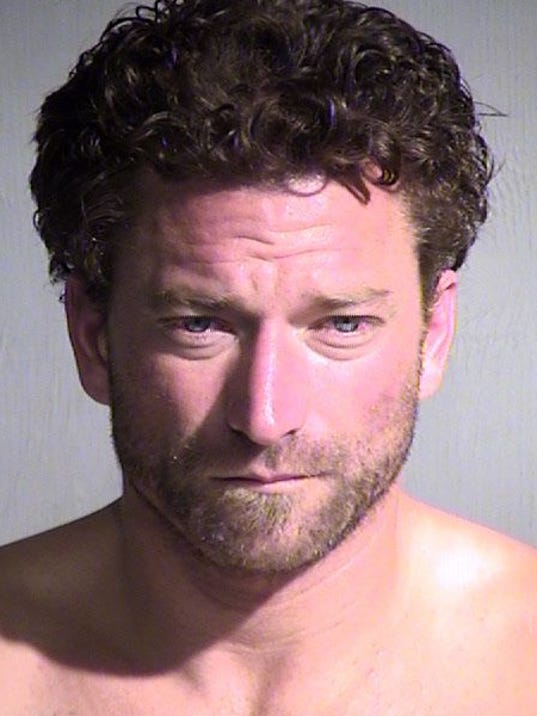
Jarrod Nixon
Jarrod Nixon was taken into custody by Phoenix cops after residents reported a man acting suspicious, trying to open doors and asking for people who didn't live there. Nixon is alleged to have fled from police and, when apprehended, according to AZ Central, the only news outlet that reported it, they charged him with "burglary, possession of a weapon by a prohibited person and drug-related offenses."

And, notably, they did not kill him in the process. They spared him. Amazing, right? After all, that list of charges and allegations sounds exactly like what Phoenix cops have said about Rumain Brisbon! Except the officer who responded to a dubious tip about Brisbon gunned him down in the process. Now, far be it from me to allege that Phoenix PD or its officers are racist, but there's one key difference between these cases that might be obvious to the attentive observer. Unlike Rumain Brisbon, Jarrod Nixon was white.

To put some context on this, it's worth turning to a recent USA Today report on the disproportionate rate at which blacks and everyone else gets arrested in America's cities. We reported recently that Tempe and Scottsdale rank at the top of the list for Valley cities whose police agencies target blacks for arrest at starkly different rates than they do whites.

Phoenix, while not scoring as ridiculously high as either of those two cities, still ranked way up there. If you're black in Phoenix, your rate of arrest is 220.5 out of 1000. But if you're not black, your chance is only 77.6. That's almost three times more likely if you're black and, incidentally, it's also a higher rate than that at which the Ferguson PD arrests blacks. Yeah, that's right. Phoenix is worse than Ferguson.

Source: USA TODAY

These figures jibe with the experience that is driving the outrage pouring out into Valley streets night after night. Speaking to the media a few days ago, Jarett Maupin, one of many organizers taking protests to the streets, said, "The Phoenix Police Department does not treat white people this way. What that officer did was harass and accost them." These comments could very easily sum up the discrepancy in the treatment that Brisbon and Nixon received. Just in the last couple months, the names of black men and women killed at the hands of Phoenix police have become all too familiar. Not just Rumain Brisbon, but also Michelle Cusseaux and Ngozi Mbegbu.

Meanwhile, in the four years since Bill Montgomery took over as Maricopa County Attorney, there have been 145 shootings by Valley police, including 14 where the person shot was unarmed. And yet Montgomery hasn't seen fit to bring an indictment in a single case against an officer. Zero. Zippo.

The idea that policing is racist and that blacks and other minorities are disproportionately targets of police attention and violence is only controversial among whites, who generally experience policing in its most benevolent form, such as directing traffic or responding to property crime. Whites, without knowing it, are in a real sense the constituency of police, which becomes obvious the minute you look at the way statistics documenting support for the police break down by race, especially in times like this.


If you take the police at their word, the cases of Brisbon and Nixon compare very similarly and go towards exactly the point that angry protesters are making. And yet here we have starkly different outcomes. Brisbon, black, was killed when Officer Rine claimed he feared for his life, mistaking a bottle of pills for a gun. Meanwhile, Nixon, white and apparently armed in some fashion, was taken into custody without lethal force.

Cops were quick to say that Brisbon had a weapon and pot in his vehicle, and to suggest that this amounted to something of a retroactive justification for his killing. A black man with a gun and drugs -- that's meant to evoke the now common racist code word "thug." Meanwhile, according to the one news agency that bothered to cover Nixon's arrest, he was actually in physical possession of both drugs of some kind and a weapon when apprehended. Again, there is no hint from cops that this would have been a justification for shooting him.

Rumain Brisbon
Nixon is also reported to have run from officers, charging into an occupied home and causing a resident to flee out a window. And yet still there is no claim that any officer feared for his or her life, and no officer shot at him. Although witness accounts dispute that Brisbon fled from Officer Rine, the department's public reasoning for his shooting hinges in no small part on their allegation that he did so.

Going by what the police have said, here we have two very similar cases. Indeed, where they differ slightly, the case reported against Nixon is worse. After all, the worst that is alleged about Brisbon is that he may have been selling drugs. The police say Nixon was breaking into occupied homes. And yet only one of these two men is now dead, killed by Phoenix police. The other will get at least a chance at a day in court. The only remaining chance for justice for Brisbon now lies in the streets.


READ MORE DOWN AND DROUGHT COVERAGE OF THE PHOENIX POLICE DEPARTMENT

Monday, November 24, 2014

Tempe, Scottsdale arrest blacks at a higher rate than the Ferguson PD

Truly shocking numbers were released today in a USA Today report detailing the massive disparities in arrest rates for blacks compared to, well, everyone else. In the Valley, Tempe and Scottsdale police stood out for particular distinction, with starkly high figures per capita.

The USA Today analysis of arrest records for police departments across the country found that almost 1600 police agencies nationwide took blacks into custody at rates above those in Ferguson, Missouri, the city well-known now for aggressive and racist policing following the shooting of Michael Brown and the turmoil that resulted.

According the the article, blacks were "more likely than others to be arrested in almost every city for almost every type of crime. Nationwide, black people are arrested at higher rates for crimes as serious as murder and assault, and as minor as loitering and marijuana possession." If you're not black, you're more likely to escape arrest for comparable crimes. Notably, the data, which came from the FBI, does not track arrests of Latinos, which in the Southwest is a major shortcoming. That number would be very good to have.

Of particular note, two Valley police agencies, Tempe and Scottsdale, not only have arrest rates for blacks higher than Ferguson, but take blacks into custody at more than double (triple in the case of Scottsdale) that which has set the Missouri city on fire with accusations of police harassment of a black population by white police agency.

Source: USA TODAY

Tempe, this year found itself embroiled in controversy when ASU professor Dr. Ore, who is black, was stopped off campus by a white university cop. The stop, which many viewed as unnecessary, aggressive and racially-motivated, set off a media firestorm and enraged many residents of the college town, some of whom took their anger to a Tempe city council candidates forum, disrupting the event.

Tempe, which likes to brand itself as a progressive city despite its history as a Klan bastion, will have a hard time making the case that these numbers don't indicate a serious problem for a police force that many see as out of control. While Ferguson's arrest rate for blacks was 186.1 (versus 66 for whites) out of a thousand, Tempe's came in at a staggering 405.5! Anglos, on the other hand, got arrested at a rate of 120 per 1000 in Tempe, still almost twice that of Ferguson but over a third less frequently than blacks. If you're black, Tempe PD has its eyes on you.

Tempe police have come under scrutiny lately as a result of a program called "Safe and Sober", which involves upwards of 20 police agencies flooding downtown with officers, making thousands of stops of all kinds, ostensibly to battle alcohol consumption. Locals report harassment and profiling.

The city hasn't released final numbers on this years' program (which has run for two years now) -- including data on the race of those people that were stopped -- but numbers like those compiled by USA Today lend support to suspicions that racial bias is very likely at work. Back of the envelop calculations by local activists put the rate of stops during the three weeks that "Safe and Sober" runs in Tempe at per capita levels comparable to NYC's highly controversial "Stop and Frisk" program, which was ruled racially biased this year.

Source: STATE PRESS

The City of Tempe has suffered a series of public black eyes around the issue of policing in the last couple years. In 2013, during the first year of "Safe and Sober," local cops gunned down Austin Del Castillo in broad daylight in downtown Tempe, sending bullets into a nearby restaurant.  Before that, in May of the same year, Tempe police opened fire on a man who had broken into the wine cellar of a local restaurant downtown. Then there was the Dr. Ore incident. In July, Tempe police were caught on video beating a homeless man, again on Mill Avenue downtown. An internal review by the police of the police ruled the violence justified, although they admitted that proper procedure wasn't followed when officers failed to file the use of force paperwork that should accompany such incidents. Tempe has also raised concerns by failure to come clean on their possession and use of a StingRay cell phone spy device and whether and how that is being used to snoop on residents.

Critics of the Ferguson PD point to giant disparities between the percentage of cops who are white on the force compared to the general population. A recent NY Times article. "The Race Gap in America’s Police Departments", highlighted these discrepancies in several departments nationwide, including half a dozen in Arizona. The study didn't give stats for Tempe, but it did show clearly that whites were over-represented in all the Valley departments surveyed, sometimes skewing (in the case of the Phoenix Police Department) as much as 35% more white than the local population they police. The Phoenix PD, by the way, ranked in the USA TODAY study at 220.5 for blacks, and 77.6 for everyone else. Incidentally, the city with the smallest gap between population and police, demographically, was Scottsdale. But that was only because Scottsdale is 84% white. There isn't much room to go higher than that, although SPD does manage to still put 6% more whites on their force than the general population.

Changing the racial makeup of the police force won't solve the problem of police brutality and profiling, but the fact that they are so out of whack with the general population again gives cause to believe, combined with those radically skewed arrest stats, that profiling is probably going on. And a lot of it.


We asked TPD if use of force paperwork was 
filed in the above case and they never replied

This data also shows how little things have changed in the Valley. Tempe and Scottsdale, both historically "sundown towns" where nonwhites were strongly encouraged, to put it mildly, to make themselves scarce when nightfall came, obviously still put a heavy emphasis on the policing of blacks within city limits. As troubling as Tempe's outrageous data is, Scottsdale's is even more disturbing. It wasn't that long ago that scandal wracked the SPD when it came out that some officers were enforcing what they called a "no n*gger zone" in the wealthier parts of a generally very well-off city. These stats show an inexcusable gulf between the policing that blacks and everybody else gets in Scottsdale.

Either way, if you're black in Scottsdale and Tempe you have good reason to worry about the police. Just like Dr. Ore, you may very well find yourself attracting the special attention of local law enforcement, for no other reason than your skin color. Perhaps data like this is the reason why Tempe has been so reluctant to release the racial breakdown of the "Safe and Sober" stops. But that's all the more reason why they should.

Thursday, July 31, 2014

Cops say what they really think about ASU Professor Ore in online fourms and it's not pretty

Just keyboard warriors? Behold one cop's response to the arrest of Professor Ore. Here's what a bunch more had to say. Are you mad yet?

REM870 is a reference to a shotgun commonly used by police

On August first, ASU English professor Ersula Ore will be sentenced for "passively resisting an unlawful arrest" after Officer Stewart Ferrin confronted her for jaywalking and obstructing traffic in closed off a construction zone near the university.

The case sparked outrage, protest and even some drama at one of the Tempe city council candidate forums when outraged community members vocalized their frustration with local cops. As the scandal put pressure on ASU, the officer was put on leave and the two top bosses at the university cop shop were eventually replaced. Local dissident cop blog, The Integrity Report, has been documenting the internal shakeup which at least some officers seem to hope will create an opportunity to rein in a police force that they allege (with a good deal of evidence) is unaccountable and out of control.

Professor Ore (Photo via Phoenix New Times)
But since Ore took responsibility for her act of self-defense, much of the tension has dissipated from this once highly controversial and contentious case. Coverage was mixed in the media but it has mostly dropped off the radar as she moves towards sentencing.

Notable exceptions include a recent exchange of letters to the editor, one by former Mesa cop Bill Richardson defending Ferrin's character, followed by a response challenging it ("Letter: Police officer's personality doesn't matter"), both run in the State Press, ASU's east campus newspaper. Over the course of the scandal, one particular local weekly news blog/magazine left some very interesting things out of the story, but we'll come back to that at the end.

We at Down and Drought pay a lot of attention to the police, including cop online forums. So when we saw last week that New York Magazine had run a piece focusing on the comments from officers on various cop websites regarding the recent death of a cigarette vender, who appears to have died as a result of very rough treatment by the NYPD, we thought we'd give the Ore case the same treatment. We thought: let's see what cops have to say online about her case, under the cover of (what they think is ) anonymity.


As the NY Magazine article points out, in order to post on cop forums like PoliceOne.com, you have to register and be verified as an actual cop or retired law enforcement officer. PoliceOne.com boasts over 200,000 members and claims that they "confirm the status of all officers registering... by calling that officer’s department directly." Which means when you read opinions from commentators on their forums, you can be pretty sure you're getting the thoughts of a cop or former cop.

We were able to track some of these officers back to their departments ourselves through basic internet searches and confirm that they are in fact cops, but we weren't able to link any of them directly to ASU -- although some of the comments we looked at demonstrated knowledge of policing in Tempe and Arizona.


That said, it's important to note that the comments we're sharing here, while outrageous, weren't out of step with the general tenor of comments we found. No comments defended Ore and most posters thought that Ferrin had been too forgiving with her. As we've demonstrated before, Phoenix and Tempe police have notoriously bad senses of humor (see here, and here, and here). So there's no reason to think that they are any better than online cops in terms of their opinions.

So let's dig in and see what some cops had to say about the Ore arrest. To get things started, here's one officer making a joke referencing sexual assault. Remember, Ore objected vocally on the video about Ferrin's manhandling of her causing her dress to hike up. Thus an officer naturally thought this was an appropriate joke to make.

 In the same comment thread, another officer chimes in:


In a different post on the same site, user "SgtDavidWilliams" rushes to Ferrin's defense, counseling that she's lucky she didn't get the rougher treatment he thinks she deserved:


Advocating for less tolerance and a higher degree of violence was common in the online cop forums we looked at. Most officers took the position that Ferrin had been too kind in his interaction with Ore.

Officers also frequently argued for liberal use of the Taser. One user hinted in a "wink, wink, nudge, nudge" sort of way that "I did see a taser on his belt, correct?" In the comment below, the reference to "sparky" (the taser) may or may not be a double entendre also alluding to the ASU mascot, but it certainly indicates a casualness that is disturbing when it comes to the use of a weapon that has been linked to many deaths over the years.


Along similar lines was another comment boasting that the "college professor would've met the pavement far sooner had I been arresting her." Yet another joked that Ferrin should "probably work on that straight arm bar takedown." Later in the thread another member says, "She really needed to taste the color of the paint on the hood."


Another set of comments focused on Ore's race and gender, reflecting the usual tact and sophistication that one tends to expect from the reactionary right.


In an era of increasing skepticism and worry about the police, even on the traditionally law and order right, comments like those we found don't do cops any favors in the PR department. If white middle class people -- the traditional base of support for law enforcement, no matter how brutal -- are worried about their interactions with police then it's an indication of something significant going on. Police should be worried. The carte blanche they've had for, well, basically forever may be in danger.

And those curious omissions I mentioned at the beginning? One of the curious features of the Ore coverage was the oddly reactionary treatment from the Phoenix New Times, spearheaded by Ray Stern. Stern went pretty hard against Ore. He conceded Ferrin's approach appeared "mildly thuggish," but when Ore pleaded guilty he pronounced somewhat smugly that, "it looks like Ore's done fighting the good fight. We're not expecting her to follow up on the threat she made in the video to sue the (bleep) out of the officer or ASU."


In one article, Stern in passing gives us a brief history of Stewart Ferrin, who it was revealed early on hails from a law enforcement family and had long harbored aspirations of continuing that legacy. But what legacy? Strangely, Stern fails to mention another little bit of Ferrin law enforcement family history -- one detailed in the very archives of the Phoenix New Times itself!

In a September 1998 article entitled "Thrust and Parry," the New Times detailed in a feature article the story of Alvin Yellowhair, a Native American student at ASU who alleged that Stewart Ferrin's father, John Ferrin, then an officer with the Tempe PD, had beaten and sodomized him with a nightstick after arresting him at a party.

"Advocating for less tolerance and a higher degree of violence was common in the online cop forums we looked at." 

The case, which involved missing evidence and allegations of obstructionism from city officials, was eventually ruled in Ferrin's favor, and he came out the winner in a lawsuit by Yellowhair, too, which was finally resolved by jury in 2005. But the case led to allegations of an out of control police force without proper supervision and the revelation that the senior Ferrin, at that point, had had four citizen complaints against him which the city didn't want to reveal. Does any of this sound familiar? White cop, civilian person of color, ASU, use of force, out of control police force, potential cover up and lack of investigation? Quite an omission, if you ask me!

But Stern's probably right when he says that "ASU's very sensitive to the pubic perception, especially given President Michael Crow's goal to attract 100,000 students to lucrative online-degree programs." Indeed, the University should be concerned about how they will be viewed by prospective or returning students and their parents. Especially if those students aren't white.

Nothing to see here!

As Professor Ore faces sentencing, with a shakeup going on at ASU PD, and with residents in the surrounding neighborhoods increasingly fed up with both the actions of local cops and the complete failure of the politicians to do anything about it, the university and the city would each be well-advised to consider taking immediate public steps to address these concerns with concrete actions.

Locals have put forward several options, from repealing the loud party ordinances that so quickly can escalate under heavy handed policing, to canceling the upcoming "safe & sober" campaign (in which cops invade the neighborhoods and detain residents at rates higher than NYC's "stop & frisk" program), or selling off controversial spy equipment like the Stingray mass cell phone monitoring device.

How about a program of de-militarizing TPD in general? In an era of mass corporate tax giveaways downtown, why not raise some cash by selling off that useless cop clutter? On a related note, does the Tempe Citizens’ Panel for Review of Police Complaints and Use of Force even meet? Down and Drought has been following the public page for this supposed oversight board for a year now and have yet to see a single posting for a public meeting nor any updates on what they're up to.

Meanwhile candidates for city council have to be forced by angry crowds to discuss the police, and the only solutions they seem to have is lavishing them with even more expensive toys which residents can be assured they will abuse. Increasingly, Tempe government looks completely out of step with a public that is asking themselves just what the hell is going on with the cops that patrol their neighborhoods. Does the city have any answers for them? It appears that answer is, no.

Tuesday, July 1, 2014

If ASU can't protect faculty from its violent police, what does it mean for the rest of us?

If you read the outline "ASU Vision and Goals: 2013 and Beyond" hosted on the page of the Office of the President, the first two objectives are as follows:
Maintain the fundamental principle of accessibility to all students qualified to study at a research university

Maintain university accessibility to match Arizona’s socioeconomic diversity
Which may seem more than a bit ironic in light of the recent ASU PD beat down of a black professor who refused to passively submit to a college cop's street harassment. As anyone knows who lives in the area, this particular street is blocked off to traffic for the construction of a pedestrian mall (this is ASU's vision for the future boiled down to its essence, by the way). People routinely cross at this location in other than legal ways as a result of debris, construction materials or because they feel unsafe walking at night.

Photo via AzFamily
While some dispute the assertions of profiling and racism being made about this particular interaction, the fact that this is a white cop stopping a black woman can't be ignored, not least of all given the stark and long history of police racism in both Arizona and the US. The stop has all the hallmarks of "walking while black," the selective harassment and enforcement of often petty laws by law enforcement against blacks. But regardless, the image speaks for itself, and countless people, including potential students and their parents, will now associate ASU with what looks on the face of it to be a racialized and violent police over-reaction and power trip.

IF PROFESSORS AREN'T SAFE FROM ASU POLICE VIOLENCE, WHO IS?

On video Dr. Ore is heard asserting over and over that she is a professor at the school, to no avail. The cop, like police in general, isn't about to back down just because there's a more reasonable alternative available (a warning, for instance). And Ore's appeal to her status fell on deaf ears.

Indeed, Dr. Ore's lawyer, Alane M. Roby, is quick to reiterate this status in his public appeals. In a statement to CNN, he said,  "Professor Ore's one crime that evening was to demand respect that she deserves as a productive, educated and tax paying member of society." 

But, of course, it isn't just the "productive, educated and tax-paying" members of society who deserve not to fear getting interrogated and beaten by cops on Tempe streets, it's everyone. So what does this mean for residents and students of lesser stature?

A memorial to Austin Del Castillo (photo via New Times)
A HISTORY OF VIOLENCE AND ESCALATION

Last year, during the height of its ASU-supported "Safe & Sober" invasion of the neighborhoods surrounding the Tempe campus, Tempe police shot and killed Austin Del Castillo in plain daylight at one of the busiest intersections in the city. At least one bullet reportedly missed and hit the now closed but then operational Chili's restaurant. Del Castillo was shot, in part, because he was not acting like a "productive, educated and tax paying member of society." Witnesses disputed police claims that Del Castillo was lunging at officers when they opened fire on him.

Likewise when police let loose on William Barret, who had broken into House of Tricks' renowned wine cache for a taste of the good stuff.  Police blasted on him when he supposedly lobbed an empty bottle at an officer.  The officer was uninjured, but from jail Barret said, “They shot me in the hand. If I stuck my head out they could have shot my head off.” When in doubt, escalate seems to be the ethic of the cops patrolling ASU and the surrounding neighborhoods.

Purchase order for spy camera (Image via The Integrity Report)

Or, when escalation isn't the go-to option, Tempe cops go for humiliation, as in the now infamous case of Sgt. Chuck Schoville. Here at Down and Drought, we've cataloged TPD's many gaffes and abuses, including their really awful sense of humor, their expansion of their secret surveillance powers, their crackdowns on Tempe's traditional party culture, their protection of racist frats, their surveillance of tailgaters at football games, and much more.

Not covered by us, but equally troubling is the post-retirement career of former ASU top cop John Pickens, who will continue to head up University Security Initiatives, ASU's surveillance apparatus (why do they need one?). Note ASU PD's recent purchase of a KJB Security Wall Outlet Hidden Spy Camera. What's that for? Who's getting spied on? Is ASU a university or an intelligence agency (a tip of the hat to Michael Crow and his time working with CIA tech fund In-Q-Tel)?

Meanwhile TPD continues to spend $5 million a year on its own SPARC surveillance center, recently taken to task by former Mesa cop Bill Richardson in the pages of the State Press. In other troubling news, dissident cop blog "The Integrity Report" cites an ongoing history of questionable use of force and lack of accountability at the ASU cop shop. Bloggers there report several uses of force that received no review at all from department bosses. Is anyone in charge over there? Less CIA and more Keystone Kops, it seems.

All together, what we're seeing is the emergence of a local police state in Tempe operating like an army of occupation, not answerable to anyone -- regardless of social status, and apparently not accountable to anyone. In this situation, everyone has reason to be concerned about whether they will land in its cross-hairs, not just professors.

KJB Security Wall Outlet Hidden Spy Camera

CAN ASU LIVE UP TO ITS DECLARED COMMITMENT TO DIVERSITY?

Indeed, students and parents of prospective students have good reason to be concerned. If ASU can't protect a black professor from the cops, what chance do those of lesser status have? Can ASU live up to its self-appointed diversity goals if it doesn't reign in its police force?

Round two of "safe & sober" is likely going to commence with the return of students in the Fall. During the last iteration (canceled abruptly after the shooting of Del Castillo), TPD, ASU PD and MCSO (the infamously racist department run by Sheriff Joe) blanketed the streets around the university with cops, making thousands of stops. In fact, as a proportion of the population, "safe & sober" rivaled NYPD's infamous "stop and frisk" campaign. Funded by the Feds, it was likely a real windfall for the city once all the fines were added up. Almost a year later, police have yet to release any details on the racial breakdown of those stops, but if history is any guide, it likely skews heavily towards people of color and other marginalized groups.

WHAT ASU NEEDS TO DO

ASU has an easy choice here, but that doesn't mean they'll make it. First of all, they should drop the charges against Dr. Ore. Then they need to fire Officer Ferrin. ASU needs to send a message that they honor their commitment to diversity and equal access to ASU and its many scattered off campus facilities. Students and residents need to know they are not going to suffer the same fate -- or worse -- as Dr. Ore.  Finally, they should withdraw from future "safe & sober" campaigns and demand the release of data on the race of those people stopped by all police forces involved, including MCSO. ASU likes to talk big about its commitments to the community. It's time to step up and make good on them.

Tuesday, August 20, 2013

A TALE OF TWO RUN-INS WITH THE POLICE


It's difficult to watch the video of the Phoenix police assaulting -- killing -- Michael Angel Ruiz.  It's also hard to tell what exactly killed him.  Was it the chokehold that was applied for no apparent reason?  Was it the tasering?  Or was it the multiple blows to the head that he received as his head repeatedly struck one concrete stair after another as the police half-dragged, half-carried his limp body from the second floor.

In what is an all too common occurrence, the cops dog-piled someone who didn't appear to be resisting, accused him of resisting and then went hog-wild on him.  Following the assault, Ruiz lost consciousness, had to be resuscitated at the scene, transported to the hospital and was eventually taken off life support on August 2nd.  Doctors had declared him brain dead.

Channel 15 covered the story:
Many of Michael's neighbors witnessed everything and recorded it all on their phones.

Gary Carthen was good friends with Michael, and witnessed it all.
"This was bad, very bad. Because he didn't deserve that to happen, not like that," he said.

Carthen and his neighbors want answers. Verna Young says you could hear his head banging on the stairs as police dragged him down.

"I started crying 'cause that's not right, to hurt nobody like that," she said. "He didn't deserve that. He was a nice person, very nice."
Ruiz's father, a former LAPD detective was shocked by what he saw.  And if an LAPD cop is shocked by police behavior, then you know it's beyond the pale.  It's hard to imagine any thing that could explain what is clear to see on the video other than violent cops out of control.  Again.

It's perhaps ironic, given how the police treated him, that Ruiz's Facebook page, now gathering some condolence messages from friends, also features prominent posts from him supporting the LAPD in their hunt for once-rampaging cop killer Christopher Dorner, including one in which he poses in front of a Confederate flag.  The degree to which Phoenix police may have perceived Ruiz, a self-confessed Republican, as not white when they encountered him isn't clear, but one thing's for sure, that gang of cops aggressively piling on him was very white.


But let's take a step back for a minute and see if we can draw any lessons by comparison.  To do that, let's check out some coverage of a different encounter with the police that happened this week, this time over at Az Central.


Notice anything?  Well, first off there's the glaringly obvious: one got killed by the cops and the other got escorted off the property instead of arrested.  There's no indication that the cops threatened John Coulter with violence, at least beyond that which underlies all interactions with the police.  In fact, if the cops' stats can be believed, in every other incident such as this, arrest was the result.  Coulter may have gotten off pretty well, considering, receiving a only a citation.

And, at first glance, it seems like that there is probably a class difference as well, at least in the eyes of the police.   Season tickets aren't cheap, and even though many people share season tickets, I think we can conclude pretty safely that the target of the beer cops' ire was seen by them as respectable and reasonably well off.  Meanwhile, the shirtless Ruiz standing on his roof was almost certainly not viewed in the same way, or given the same benefit of the doubt.  And, of course, Coulter is clearly white.  And Coulter is alive.

In many significant ways, these two incidents are like night and day.  But what's really interesting is what Coulter says about what an epiphany it was for him to be treated in what he felt was a disrespectful way by the police.  He says, "I would normally support the police if I heard a story like this, however, in this case I was standing right there and I witnessed abuse and over-zealous pursuing of the situation... it was totally uncalled for."

No doubt, it is rare for white people -- especially white middle class people -- to encounter the police in any situation even remotely threatening to them.  Police, as far as white middle class people are concerned are helpful and kind; they direct traffic, come to take your report after an accident for insurance purposes, and keep crowds flowing at sports games.  They make you feel safe.  You generally like having them around.  This is the experience of most white middle class people.  And they generalize from this that this must also therefore be the experience of other people, people unlike them.  People that the police in fact treat quite different far away from white middle class suburban sensibilities.  And that therefore, when bad things are done to these other people by the police, it's probably because they deserve it.

So, the question is, can Coulter take the eye-opening, if relatively mild by comparison, run in that he had with the cops and use that to help him understand what other people experience.  Certainly the cops had no inkling that Ruiz's father was a former cop.  When they saw him, they saw something quite different than what they saw when they looked at Coulter.  And they acted accordingly.

Tuesday, June 11, 2013

Mesa PD will violate copyright and your rights, too, while they're at it

In what wouldn't be the first Twitter-related cop blunder we've cataloged, the Mesa PD -- fresh from the debut of its crime reporting app that might just spy on its users -- may have made another social media boo-boo.

Early Sunday morning, the Mesa PD posted an update to its Twitter feed announcing an addition to the MPD's facebook photo section.

.

Clicking on the link in the tweet delivers you to the Mesa PD's photo album, specifically a folder designated "Mesa Police Crime Scene Specialist published her first article".  In this album, Mesa cops have uploaded scans of Christine Lowenhagen entire article, including the front page of the journal.


Is this posting legal?  Is it a copyright violation?  The International Association for Identification is the organization that publishes the JFI.  A search of the IAI website brings up a pdf of official "Publication Guidelines" which mostly deals with style for writers.  However, one part does seem relevant.  It reads, "The JFI is liberal in allowing the noncommercial reprinting of articles from the JFI, especially to the IAI divisions."

While the Mesa PD may be noncommercial, Facebook certainly is not, and that's where the post was made.  Further, the "divisions" cited are regional or state associations of the IAI, so the instructions appear to be granting permission for these sub-groups that run their own independent pages to post articles.  The IAI's website itself has a list of costs for access, which line up comparably with the typically outrageous figures scholarly journals commonly charge for reading to their publications. Subscriptions for institutions, for example, are just over 200 dollars.

We emailed Alan McRoberts, the editor of the Journal of Forensic Identification, and he responded to our request for more specifics on their policy, writing, "All requests to reprint must be specific (i.e., naming the paper to be reprinted) and specify where it is to be reprinted. Each request will be considered individually."

The question then becomes whether this permission was granted.  The posting of scans suggests not.  We followed up, asking if the organization had specifically received a request for permission to post from either the Mesa PD or Christine Lowenhagen.

Mr. McRoberts replied this afternoon and provided this clarification:
Two years ago, our board of directors approved a policy regarding reprinting material from the JFI. Part of that policy indicates that "Only JFI articles that are at least six months old at the time permission is requested will be considered." The recent publication (May/June 2013) of the article from Ms. Lowenhagen is not eligible to be considered for reprinting until the end of the year. At that time, I would have to evaluate the venue (e.g., IAI division newsletter, webpage, blog, or facebook) for reprinting before making a decision regarding permission.

Going by this response, it certainly seems reasonable to conclude that the MPD did not get permission and if they had, such wouldn't have been granted for at least six months. 

When you think about it, the Mesa PD appears to be violating copyright law in the same exact way that an information activist like Jason Swartz did, activism that led the police and Feds to crack down on him quite harshly.  In fact, it was these kinds of high charges and artificially limited access common for professional journals that drove Swartz to download for online release thousands of JSTOR documents in 2011. 

This act of protest in turn led the US government to charge him with several serious crimes, levying the threat of many decades in prison against him.  His supporters cite this overly-vigorous prosecution as what drove him to suicide.  One might even go further, and invoke the arrest and imprisonment of Jeremy Hammond, the Antisec militant recently sentenced for releasing Arizona police documents in protest of racist policing.  Police in Arizona were not too keen on forgiving his internet breeches of legality.

This selective enforcement of the law, where the Mesa PD gets to decide just which laws it will enforce as well as which laws it will obey, is a problem that can't be ignored.  Just as we see it in their online activities, we see it likewise reflected in the very real world recent arrest and brutal beating of Matatangi Tai (see also: here, here).  Mesa cops have a lot of leeway when it comes to enforcement of law, but in the case of Tai, the cops were not interested in being forgiving, and so what amounted to a trespassing call, thanks to needlessly aggressive policing, turned into a violent attack on a someone who very-likely was mentally ill and unable to understand even that he was violating the law.  Tai, after all, was in a convenience store claiming he was there for his medication.  Police, however, know exactly what they are doing.  Or they should. 

Mesa police were also not in a very forgiving mood when they stunned Joseph Moreno with a taser for taking too long to surrender.  After they put him in the back of a patrol car for 45 minutes, he began slurring his speech and sweating.  When the Fire Department showed up, he was taken to the hospital, where he died.

Moreno's sister put it this way:
"I feel there was other ways of doing it... I understand, from the police point of view. But, if there was more than 40 of them, or however many, and he was in a car. He wasn't running. He wasn't in the front seat of a car trying to run off. Their way of resisting (interpreting resisting) was that he wasn't responding."
In other words, the Mesa PD has two standards: one for itself and one for the rest of us.  The law is for us to obey and for them to interpret, and that can mean a death sentence for anyone who crosses their path.  It seems copyright isn't the only thing they'll violate.

Tuesday, June 4, 2013

When is "police brutality" not police brutality? When a cop says so.


Valley news outlets have given much attention to the youtube video featuring a Mesa police officer and his failed take-down arrest, and the subsequent Mesa police dog pile on Matatangi Sentituli Tai outside of a Mesa Circle K.

Coverage ranged from the Phoenix New Times blogger Matthew Hendley describing the police violence as "supposed police 'brutality' during a physical arrest in Mesa" and "more like a blooper reel", to channel 5's Elizabeth Erwin's article which reads like a press release straight from the department's PR flacks.  KPNX channel 12 brought one time Arpaio opponent, and ex-Phoenix PD "good cop" Paul Penzone onto their morning show to justify the actions of the officers, giving the excuse that the only reason this looks so bad is that "there should have been more aggression earlier on."

So there you have it, Valley media and police officers can agree on one thing: they know police brutality when they see it, and this was no police brutality.  A couple of the articles mention a car accident, which is audible in the video, which happened when an off duty Mesa cop ran a red light to jump in on the arrest.  To my knowledge there has been no follow up from any media outfit on the condition of the other driver, and many outlets failed to even refer to the accident.

In addition, a Mesa family is grieving the loss of their family member Joseph Moreno, he died after being tasered and arrested while the U.S. Marshals East Valley Fugitive Task Force were executing a search warrant for a parole violation.  The officers tasered the unarmed Moreno when an officer felt threatened.  The arrested man was placed in a patrol car for 45 minutes where his speech slurred and he sweated profusely.  Eventually Moreno was taken to a nearby hospital where he was pronounced dead.

The Moreno family has organized a vigil for their Joseph this Thursday, June 6th at Pioneer Park in Mesa at 8 PM.  The family is also in need of financial support, they have set up an account for donations to help with the costs of the funeral, the account is with Chase Bank and donations can be made to account number 2995635725.  The family is also receiving support from three fundraising car washes this Saturday at the following locations:
  • Taco Mexico Restaurant at 27th Ave and Camelback at 7 AM
  • 8607 E. Main St in Mesa between Sossaman and Ellsworth at 9 AM
  • Rudy's Restaurant near Ellsworth and Ocotillo in Queen Creek at 8 AM

Monday, June 3, 2013

Video shows Mesa cops responding to a trespassing call by beating the crap out of a confused man at Circle K


Proving yet again that there is no interaction that a cop can't escalate into a violent confrontation, a video causing waves today shows a Mesa officer responding to a trespassing call at a Circle K and winding up in an all-out brawl, including tasering, pepper-spraying and punching a man in the process of arresting him.

The victim, identified as Mantagi Tai by the police, had been inside Circle K claiming he was there for his medication.  According the cops, the officer demanded identification from Tai and ordered him to sit down.  When Tai refused the officer pulled out his taser and started making aggressive moves and swearing loudly, telling Tai "to sit the fuck down or you're gonna get tased".

From there, all hell broke loose, and after a very violent struggle the officer, with some help from an off duty cop passing by, a plain clothes office and an elderly security guard, managed to take Tai down hard to the ground, where they then proceed to pummel, knee and tase him violently.  At one point there are three officers, all of whom appear to be white, attacking one man of color, with a white security guard joining in at various points.  The officers knee Tai in the back violently and strike him repeatedly in the face while he is on the hot blacktop.  So far the news has ignored the obvious question of whether the officer would have reacted the way he did if the suspect had been white.

The discussion online and in the media has broken down along the lines of whether this was justified force or not.  People commenting on the raw video on YouTube seem to be mostly taking the side of the officer, but plenty assert that the video shows cops out of control and going too far.  The Mesa PD spokesman, Sgt. Tony Landato, makes sure to point out that the off duty officer who joined the fight (after crashing his truck into a light pole and possibly injuring someone) lost his pistol in the fight, and cites that as a reason for the viciousness of the cops.

But it seems this all misses the real point, which one YouTube user summed up like this:
So? None of that would be material if the cop stepped back, and used his radio, instead of revealing that he fights like a wuss. I'm not billy bad ass, but I did wrestle in high school. Pretty much any high school wrestler would have been on top of that cop.
Exactly.  Whereas ABC15 ended their coverage with some dimwitted anchorman remarking how "it does show how dangerous an officer's job is on a daily basis," in fact what the video shows is how dangerous it is for other people when a police officer shows up.  The officer is the one responsible for this whole situation.  It's his escalation, threats and then violent attack that transformed this from a simple case of removing someone from private property into a potentially life-threatening battle.

What we have here is a cop over-reacting and escalating an encounter when someone merely doesn't comply with an aggressive and rude demand for identification and an order to sit down.  An order that it's entirely possible that Tai doesn't even understand.  After all, extrapolating from his reference to medication and confused behavior, he may well be mentally ill.

Surely there was another solution to this problem.  But Mesa PD, as with police in the Valley generally, continue to demonstrate their aggressive and adversarial nature, as well as their dedication to violence and bullying as their preferred method of problem-solving, especially when dealing with people of color.