Showing posts with label police state. Show all posts

Thursday, December 11, 2014

Phoenix cops chase down fleeing white guy with weapon and drugs, don't kill him

Did you notice? Maybe not because only one news outlet covered this seemingly unremarkable story. Yesterday the Phoenix police apprehended a man they accused of a set of crimes that ought to sound very familiar to you if you've been following the local case of Rumain Brisbon, an unarmed black man shot dead by Phoenix Police last week.

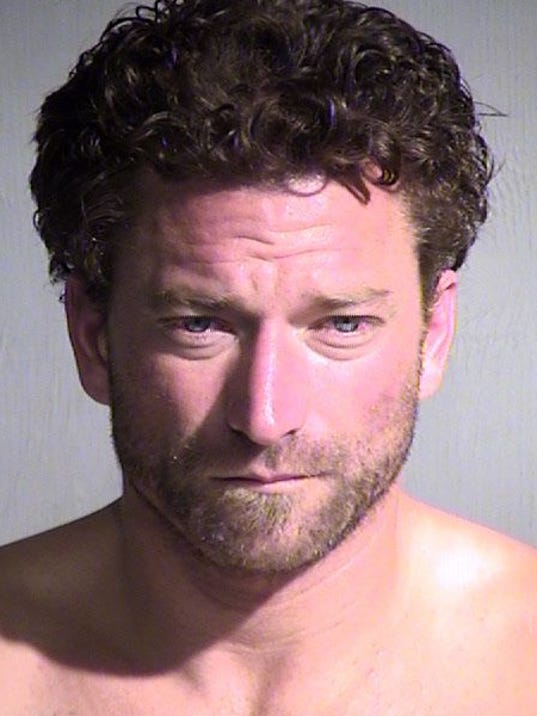
Jarrod Nixon
Jarrod Nixon was taken into custody by Phoenix cops after residents reported a man acting suspicious, trying to open doors and asking for people who didn't live there. Nixon is alleged to have fled from police and, when apprehended, according to AZ Central, the only news outlet that reported it, they charged him with "burglary, possession of a weapon by a prohibited person and drug-related offenses."

And, notably, they did not kill him in the process. They spared him. Amazing, right? After all, that list of charges and allegations sounds exactly like what Phoenix cops have said about Rumain Brisbon! Except the officer who responded to a dubious tip about Brisbon gunned him down in the process. Now, far be it from me to allege that Phoenix PD or its officers are racist, but there's one key difference between these cases that might be obvious to the attentive observer. Unlike Rumain Brisbon, Jarrod Nixon was white.

To put some context on this, it's worth turning to a recent USA Today report on the disproportionate rate at which blacks and everyone else gets arrested in America's cities. We reported recently that Tempe and Scottsdale rank at the top of the list for Valley cities whose police agencies target blacks for arrest at starkly different rates than they do whites.

Phoenix, while not scoring as ridiculously high as either of those two cities, still ranked way up there. If you're black in Phoenix, your rate of arrest is 220.5 out of 1000. But if you're not black, your chance is only 77.6. That's almost three times more likely if you're black and, incidentally, it's also a higher rate than that at which the Ferguson PD arrests blacks. Yeah, that's right. Phoenix is worse than Ferguson.

Source: USA TODAY

These figures jibe with the experience that is driving the outrage pouring out into Valley streets night after night. Speaking to the media a few days ago, Jarett Maupin, one of many organizers taking protests to the streets, said, "The Phoenix Police Department does not treat white people this way. What that officer did was harass and accost them." These comments could very easily sum up the discrepancy in the treatment that Brisbon and Nixon received. Just in the last couple months, the names of black men and women killed at the hands of Phoenix police have become all too familiar. Not just Rumain Brisbon, but also Michelle Cusseaux and Ngozi Mbegbu.

Meanwhile, in the four years since Bill Montgomery took over as Maricopa County Attorney, there have been 145 shootings by Valley police, including 14 where the person shot was unarmed. And yet Montgomery hasn't seen fit to bring an indictment in a single case against an officer. Zero. Zippo.

The idea that policing is racist and that blacks and other minorities are disproportionately targets of police attention and violence is only controversial among whites, who generally experience policing in its most benevolent form, such as directing traffic or responding to property crime. Whites, without knowing it, are in a real sense the constituency of police, which becomes obvious the minute you look at the way statistics documenting support for the police break down by race, especially in times like this.


If you take the police at their word, the cases of Brisbon and Nixon compare very similarly and go towards exactly the point that angry protesters are making. And yet here we have starkly different outcomes. Brisbon, black, was killed when Officer Rine claimed he feared for his life, mistaking a bottle of pills for a gun. Meanwhile, Nixon, white and apparently armed in some fashion, was taken into custody without lethal force.

Cops were quick to say that Brisbon had a weapon and pot in his vehicle, and to suggest that this amounted to something of a retroactive justification for his killing. A black man with a gun and drugs -- that's meant to evoke the now common racist code word "thug." Meanwhile, according to the one news agency that bothered to cover Nixon's arrest, he was actually in physical possession of both drugs of some kind and a weapon when apprehended. Again, there is no hint from cops that this would have been a justification for shooting him.

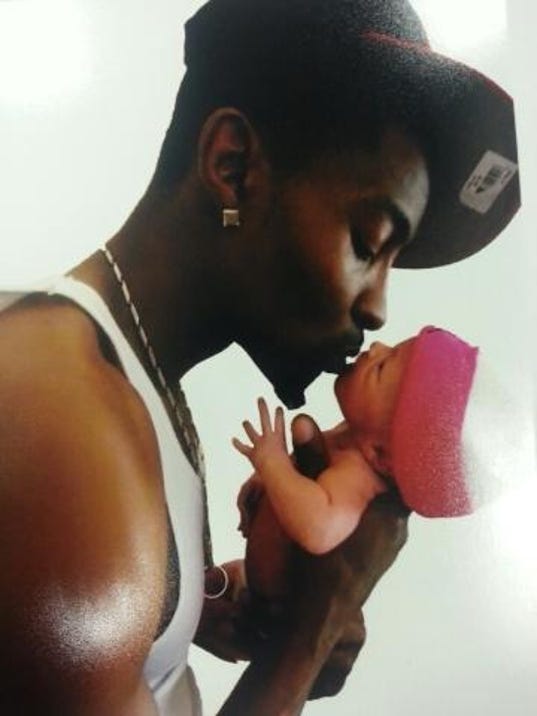
Rumain Brisbon
Nixon is also reported to have run from officers, charging into an occupied home and causing a resident to flee out a window. And yet still there is no claim that any officer feared for his or her life, and no officer shot at him. Although witness accounts dispute that Brisbon fled from Officer Rine, the department's public reasoning for his shooting hinges in no small part on their allegation that he did so.

Going by what the police have said, here we have two very similar cases. Indeed, where they differ slightly, the case reported against Nixon is worse. After all, the worst that is alleged about Brisbon is that he may have been selling drugs. The police say Nixon was breaking into occupied homes. And yet only one of these two men is now dead, killed by Phoenix police. The other will get at least a chance at a day in court. The only remaining chance for justice for Brisbon now lies in the streets.


READ MORE DOWN AND DROUGHT COVERAGE OF THE PHOENIX POLICE DEPARTMENT

Wednesday, January 22, 2014

Party Foul: Racist ASU frats are ruinning Tempe's party culture

Tempe frats aren't just racist.  They're also bad partiers.  And they're ruining it for everyone else.

At least no one wore blackface.  That may be the one positive thing you can say about the stupid, racist "MLK Black Party" organized by members of ASU's Tau Kappa Epsilon.  Saved by low standards?

Thankfully not.  The university stepped in, suspending the organization for a second time in just over a year after pics from the party surfaced documenting white celebrants donning sports jerseys, tossing up gang signs and drinking out of watermelons.  By the way, the first suspension came after a gang of about 20 TKE members invaded an apartment complex and assaulted a black associate of another fraternity, an attack that certainly takes on a different hue in light of recent events.  Local civil rights advocates have issued a series of demands and threatened a boycott.

Photo via Phoenix New Times

This newest incident comes as the latest in a long line of frats behaving badly in Tempe.  Recent incidents include the near-immolation of an underage female party-goer, the aforementioned assault, a gun fight, the ditching of frat brother, intoxicated and near death, at a local emergency room with a post-it note stuck to himEtc, etc.

Reacting to the frat chaos, the city and police department vowed to respond.  "These young individuals as well as the property owners, they have to respect the right of our community and that is what we are trying to do," said Chief Ryff at the time.  The city set about making a plan to crack down, not just on trouble-making frats, but on the community in general.

This plan manifested at the beginning of the 2013-2014 school year, under a program called Getting Arizona Involved in Neighborhoods (GAIN).  Hundreds of cops invaded and occupied the neighborhoods surrounding the university.  In Arizona's version of Stop and Frisk, thousands of police contacts were made.  Over three weekends Tempe police and Maricopa Sheriff's deputies charged almost 1400 people, certainly very few of whom were fratboys.


In particular, the inclusion of the MCSO in the program raised serious questions, given their terrible record of profiling Latinos and other people of color.  Students and residents in the neighborhoods around ASU resisted the police invasion in a variety of ways, including a popular Twitter campaign with the hashtag #shotsforjoe, which accompanied pictures of determined youthful partiers mocking Sheriff Joe Arpaio, drinks in hand, in defiance of the crackdown on good times.  Residents reached out to the media to explain their side of the story and to denounce the racism of the TPD and MCSO.

The crackdown was abruptly cut short after police gunned down a Tempe resident in broad daylight in the heart of downtown Tempe.  Witnesses contradicted the police story, but one this is for sure: the city had declared the area a police state, announcing a "zero tolerance policy" for any disorder.


There is an instinctual sense that ASU, still a regular top ranker in Playboy's top party schools list, has always been a place where partying was a part of life and that this was precisely what differentiated that part of the city from the quieter white bread suburban neighborhoods in the southern part of the city.  The areas around the school have always boasted a raucous culture of house parties and drunken walks home from the bar.  People live in downtown for a reason and accept and enjoy a certain degree of chaos.

But this traditionally more wild lifestyle has increasingly come into conflict with the city's plans for yuppification, upscalification and conventionification of downtown.  Recently the city changed it's standards for noise ordinances and residential codes in an attempt to homogenize the city.  Police can now act immediately to shut down loud parties whereas before they were required to give a warning.

As the city plans for a future of middle class USA basketball tourists and insurance salesmen, the need to domesticate downtown has become more pressing, and fratboy antics have given them the excuse they need.  Speaking to the Republic of the basketball deal, Susan Eastridge, CEO of Concord Eastridge, Inc., said, “In a lot of ways, we think this will invite even more development to happen in Tempe."  The expansion of commerce downtown demands order.


So it was no surprise that the police trotted out frat violence as their excuse for their crackdown.  The city recently released it's own self-tabulated results of the crackdown, citing reduced noise violations and lower incidents of muggings as proof that they had achieved their objective.  But at the outset the city had singled out in particular the frat violence and sexual assaults as justifications for their increased policing of what they deem the "loud party corridor."

Frat row, closed for business

Therefore, it's worth noting then that the city's own numbers have shown that they have completely failed in this objective.  Neither reports of aggravated nor sexual assaults declined in the period of increased policing, which cost nearly $150,000 (most of which was covered by the Feds) and which padded officers bank accounts with plenty of overtime before the holiday season.

But how does this relate to a bunch of white fratboys throwing a racist party?  Because despite what the city says, downtown Tempe is a place that welcomes parties, but the frats are really bad at partying.  They are self-centered and disconnected from reality in ways that are very troubling.  The failure to understand how their actions would be viewed and the message it would send is indeed deeply troubling.  And this violence, racism and general poor form is providing an excuse for the police to crackdown on everyone else.

Many people who are aware of Arizona's history as a segregationist state, of the battles over the MLK holiday, and the infamous racist rant of former governor Evan Mecham might not be surprised by whites acting badly.  Yet some people are wondering, "shouldn't these kids have known better?"  It turns out Tempe and ASU has its own troubled history.  Come time travel with me.


On April 14, 1989, a white mob surrounded four black students leaving a party on the now-bulldozed fraternity row.  In what turned out to be a case of mistaken identity, 500 fratboys and other whites surrounded the men, spat on them and taunted them with racial epithets.  When it turned violent the cops broke it up, macing the crowd and arresting two of the black men, who were taken to the station in handcuffs.  The local press ignored the racist riot until a week later when protesters marched and blocked the Memorial Union on campus.  Among their demands, that all fraternities develop an anti-racism education program for their members.  Imagine that?  In 1989!

Before that, back in the day, Tempe was a Klan stronghold and a "sundown town," and many prominent members of the community -- including the mayor, city council members and civic leaders (the founder of the Tempe Rotary Club, for instance) -- boasted membership in the not so secret organization.

This included two-time mayor and perennial councilman Hugh Laird whose name graces a school and a street and who used to enjoy regaling friends and family with this touching yet eerily relevant story of racial appropriation, as detailed in the book "Memories of Old Settlers of Tempe."

'Between 1905 and 1910, the new manager of Borden's Creamery was coming from the East Coast on the train. In a letter to the present manager, who was retiring, he inquired whether he should be concerned about Indian attacks or train robbers. Several Tempeans heard about the inquiry and decided not to disappoint him.

'The evening of his arrival, he was met by several Borden officials and was driven to the creamery by horse and buggy. Borden's Creamery was located on Eighth St. just east of Rural Road. About twenty of the leading townspeople we awaiting, west of Rural and Eight St. on horseback, dressed up in feathers and war paint to "attack" the buggy. When the "attack" occurred, the officials jumped from the buggy, but the new manager grabbed the reins and started back toward town. The "Indians" followed whooping and hollering and then faded away in the vicinity of Mill Avenue. The new manager drove the buggy back to the train depot on Ash Avenue, got on the train and headed back to Phoenix.

'Other Borden officials had a "devil" of a time trying to persuade him to return and assume his duties. He didn't think the prank was funny! I know this story because my grandfather, Hugh Laird, was one of the "Indians" and he delighted to tell it every Christmas.'

It seems to me that this isn't just a question of not "knowing better."  Racism isn't just about the maintenance of a white supremacist system, although it clearly is that.  And this kind of thing isn't just a social faux pas.  As if the real crime is that the thoughts were expressed publicly.  It's obvious why the caricature of blackness, of the rapper or the sports star or the drug dealer, would appeal to a bunch of workaholic repressed white kids who were likely raised in the suburbs by parents exactly the same as them. Hell, there's not much that is appealing about the repressed white protestant pressed-suit work-worshipping 9-5 life they're all sadly destined to lead.

Whites in the US, experiencing the constant self-repression of Protestantism and the work ethic, have a long history of envying idealized versions of the lives of others.  In terms of white fantasies, you can draw a line from the Noble Savage to the hip hop artist.  The white New Ager wants the spirituality without the poverty of the reservation.  The white fratboy wants the rap swagger without the police attention and prison time.


But these fratboys are playing black without the consequences.  Paul Mooney famously remarked on this historical tendency.  These kids want to play black without the disadvantages.   To inhabit that identity when its convenient.  That's a big part of why it's particularly offensive to see a bunch of privileged rich white kids doing this kind of racist shit.

On a Tempe neighborhood forum where complaints about local cops, fratboys and racism are common, one black former frat member described his experience this way, 
The privileged white kids of these fraternities will engage in all the post-racial backslapping in the world. They say "nigga" When it comes up in rap songs, so they get to thinking they "get it"--that it's all for fun, that "only lazy hood [black] people are niggas...you know what I mean right bro? You're different."
He continued: 'These kids probably say things like "but, God, racism ended like 40 years ago, right?"'

Another problem with the behavior of the frats in the neighborhood is that the repercussions for their actions generally land squarely on other people.  Which, in the case of the police response they invite, means poor, working class people, and people of color in particular.  That is, people with a lot less power and resources than fratboys have and who don't have rich daddies with season football passes and exclusive organizations to back them up.  

Fratboys can play black all night in the apartments their parents pay for, but when they're driving home in that shiny new graduation present they fly under the cops' radar.  Their whiteness protects them.  But they have brought upon the whole neighborhood a police crackdown from which they themselves are largely immune, which is painfully ironic coming from an exclusive club of resume-builders constantly crowing about the self-described community "philanthropy" they engage in.  Check out the Facebook page of any one of these organizations.  It's nothing but photo ops of well-off mostly white kids masturbating themselves for resume points while doing what should be considered normal, human behavior.  As the old saying goes, if you're who they've sent to save us, we don't want to be saved.  Or, "you're a little short for a stormtrooper."

In addition to denouncing their racist brothers, which they should do immediately, ASU Greeks also need to be better partiers.  Most people who live in the neighborhoods around the university support parties -- welcome them, in fact.  Not just because they're fun but also because they help push back against the developers and city managers who dream of raising rents, filling the neighborhood with condos, driving fun-loving people out, and squashing out all good times that aren't bought and paid for in a bar or restaurant on Mill Avenue.  So throwing these godawful racist or violent parties puts everyone who likes parties in an awkward position.

If there's hope for defending a rebellious Tempe where fun can still happen, it's in refusing to be cowed in the neighborhoods by buzzkillers in blue (who are sometimes actual killers) and pencil-necked urban planners.  But the frats' shitty, racist, sexist and idiotic behavior has become just another excuse for the ongoing crackdown on good times in the neighborhood.  The frats need to get their shit together.  Dump the racism first and foremost.  There are parties to be thrown and beers to be drunk.  For the common good.  And before it's too late.

Wednesday, May 29, 2013

Emails raise more questions about PPD, the red squad, homeland security and the repression of Occupy Phoenix

As we continue to go through the emails released by the Center for Media and Democracy detailing Phoenix Police, Tempe Police and FBI collusion in spying and disrupting Occupy Phoenix, many troubling questions arise.

For instance, who was in the driver's seat during the police response to the ALEC protests of 2011?  It seems clear from the emails that at least some PPD officers were serving as off-duty private security for ALEC while others were working on-duty.  They were coordinating, perhaps as one might expect, but this cooperation raises real questions about the role of a police force that likes to claim that its presence at protests is to facilitate the exercise of constitutional rights.  Clearly PPD doesn't look like an unbiased actor given these facts, a conclusion that no seasoned activist would dispute.

These records also show clearly that PPD was working with banks and, through the FBI fusion center, private security firms like Infragard.  Many questions about these relationships will surely be answered as we dig deeper into these thousands of emails.  But as of now, the answers don't look good for PPD and other police agencies.

Still other emails raise questions about not just the independence of the PPD, but also of whether there was appropriate oversight of such police protest staples as the community relations unit (affectionately known by local activists as the "red squad"), just what it's actual role is in the era of anti-terrorism and even whether it ought to exist at all.

This team plays a central role in the released messages which show it several times to be very important on the ground links for funneling information to police anti-terrorism officials and the FBI fusion center, and for carrying out their plans.  Such a relationship validates the "red squad" monicker that activists have given the unit.  Time and again the community relations unit proves itself to be an integrated part of the overall spying apparatus.


One recurring source of serious concern centers around the role played by Detective Chris Wilson, at the time assigned to the Phoenix PD community relations unit.  As we have previously reported, Detective Wilson, now revealed to have been using his contacts and authority as liaison to the Phoenix LGBTQ community to target and sexually abuse underage boys, is frequently cited in these documents as a source of information and as someone who can use his community contacts to get details on protesters and their plans.  

In the documents features above and below, Brenda Dowhan of the PPD and an alphabet soup of various other anti-terrorism related units responds to a February 2nd request by Tracey Woods of the Glendale PD for "a list of Occupy Phx members with pics".   Woods email in turn was in response to an initial message from Dowhan warning that underage occupiers, known to "openly consume drugs and alcohol" and "create a riotous atmosphere", might attend a fundraiser for a gay pride scholarship at the Mighty Cup & Spoon in Glendale. Incidentally, among Dowhan's other duties was to monitor Facebook and other social media.


Dowhan refers Woods to Wilson, who she says "has contacts with the LGBT and can obtain more information on their plans for the night".  Here we not only see the direct relationship between the community relations unit and the homeland security behemoth, but also how Det. Wilson's directives from above to spy on and interface with elements within the LGBTQ community put him directly in contact with the community he was later to admit victimizing.  This is of course particularly disturbing given the November memo from Det. Wilson's direct supervisor on the community relations unit, Sgt. Mark Schweikert, alleging that Wilson had protection from powerful individuals in the police and city government, and that Wilson was as a result difficult to manage.

But we must resist the tendency to chalk this up to a single bad apple.  In fact, what these emails reveal is that the "red squad" was key in the repression, surveillance, and disruption Occupy Phoenix, not to mention the role it played in creating the opportunity and authority necessary for Wilson to abuse his young victims.  Further, it suggests strongly that it has become a key element of the larger anti-terror infrastructure, a vital part of the information funnel and repressive machinery of homeland security that increasingly targets domestic activists as part of its ever-expanding mandate.

As the saying goes, if all you have is a hammer, every problem looks like a nail.  And this is precisely the model on which anti-terrorism operates, a form of policing to which community relations has become wedded.  Assets unused for fighting terrorism instead must be justified by hyping threats.  Likewise, resistance must be framed as terrorism.  And the red squad was situated at a crucial juncture in that system.  Such a relationship creates a chilling effect with regard to the exercise of the very rights it claims to protect and makes a very good case for the total dismantlement of the unit.


This is part 4 in our ongoing series analyzing recently released police and Federal documents detailing their surveillance and infiltration of Occupy Phoenix and anarchists in the Valley.

Friday, April 26, 2013

Spier beware: Is the Mesa PD's new snitch app actually spying on you?


Is the new Mesa Police Department's new mobile app spying on the very "good citizens" it purports to gather tips from?  If the permissions section of the Android download page is to be believed, it very likely is.  But just how it might be spying on you depends on which app you download, and it's not clear from the cops' webpage which one you're getting.

The MPD announced the other day that they have a new app for taking tips on crime in Mesa, paid for with funds raised through RICO seizures.  Interestingly, clicking on the Android link on their website actually takes you to an application called TipSubmit.  If you are foolish enough to download it, not only does the program track your location very specifically, but it also has full access to the camera on your phone, which it can use "at any time without your confirmation."  Quite disturbing.

But if you go to Google Play, however, and do a manual search for "mesa police Arizona", what you get is a link to a different app, presumably the new one.  Of course, this one, too, has access to your location, but it also has the ability "to call phone numbers without your intervention".

A search for that specific permission brought up a Geek Squad article titled "How to spot a bad Android smartphone application",  which labeled the ability to directly call phone numbers as "[v]ery suspicious".  Indeed, the app itself notes in its own description that this permission "doesn't allow the app to call emergency numbers" -- ironically probably one of the main functions one would expect from such an app.  So who is it calling?  And what does it need those numbers for?  Does this power extend to turning on the microphone?  Certainly, this ought to give any potential user pause before downloading.  Apparently the Mesa PD didn't think these issues were important enough to address in their press conference -- or maybe no reporter thought to ask them.  Certainly users deserve to know.

The Mesa PD has been quite purposeful in its adoption of policing technology over the last few years, recognizing it as a potential force multiplier in its war on the poor.  In a recent Fox 10 article, Chief Frank Milstead said, "We're a very lean department so we have to use technology to make up for deficiency in staff."  At the same press conference in which he rolled out the new snitch app, he likewise touted the MPD's new mobile identification system and on the spot ticketing system.


Clearly the Mesa PD is dedicated to the 1984-ification of policing, and their new snitch app should be seen in this light.  It masquerades as a tool for making everyone safe, but it's really just yet another Big Brother weapon in their arsenal -- an arsenal that is aimed squarely at us.  It's not intended to make us safer, it's meant to make us more easily controlled, to sow the seeds of distrust and turn us against each other.  To turn us all into potential snitches.

What's more, these police apps bombard us with crime news from our neighborhood and city.  Mesa PD's app promises a paranoia-inducing "crime maps" feature, in which we can  "[v]iew real-time crime maps of activities in your neighborhood or across the city. Explore the details behind the crimes."


Chief Milstead put it this way: "People accusing us of misuse of force. I think our officers are safer because people realize they're on video and they're actually being held accountable by videotape for their actions."  In a January interview, Mesa PD Sgt. Tony Landato described the application of their new fingerprint system.  He said, “Our officers stopped a subject who matched the description who was acting very suspicious. ... We ran his fingerprint. It was not our suspect in the domestic violence. It was a homicide suspect.”  They arrested him.  He had been caught in a very wide virtual and physical dragnet.

The Mesa PD wants to watch us at all times, and it's not about making us safer.  In their unblinking eyes, we are all suspects, especially if we are poor or if we're not white.  We're all suspicious in their eyes.  And where gaps in their surveillance exist, they expect us to do the work for them.  Milstead summed it up in a recent NPR interview: “If we don’t use the public’s eyes to help not only to report crime but to help solve crime, we’re going to miss things."  This app is meant to fill in those gaps by reporting on everyone.