Showing posts with label development. Show all posts

Saturday, December 28, 2013

COMPANIES SEEK PARTNERSHIPS WITH ADOT TO PROFIT ON FREEWAY, PART 2: THE METHODS


The future of the proposed $2 billion South Mountain extension of the Loop 202 freeway is not looking so bright, and with good reason. In August the Environmental Protection Agency (EPA) released a statement which found the Arizona Department of Transportation's $22 million Draft Environmental Impact Statement (DEIS) to be "inadequate", and unbalanced by overstating the risk of greater traffic congestion and air pollution if the freeway was not built.

In addition, two school districts have passed separate resolutions against the extension of the Loop 202 freeway citing environmental impact and health concerns for students and residents. The Tempe Union High School District Governing Board passed a resolution in November opposing the new construction, while the Kyrene School District Governing Board passed a resolution in October that opposed the extension and in support of the "No Build" alternative to the Pecos Rd alignment. 

The anti-freeway resolutions supported by two school districts, and the EPA's statement are validations of the concerns of Akimel O'odham residents of the Gila River Indian Community and their grassroots campaigns to halt the project.  Despite the opposition from community members and the negative report from the EPA, a coalition of construction groups continue to lobby for the South Mountain extension, along with the Arizona Republic's editorial board, and a handful of Phoenix politicians (including two who admit they have taken donations from the construction groups, and another who has land investments tied to the freeway). While the freeway project appears to be in limbo, state transportation officials insist that construction will begin soon, even if the funding sources could face more criticism than the politics behind the freeway.

The article below is the second part to the series of article from the Stop CANAMEX blog and details more of the complex relationships between the business interests lobbying for the construction of the freeway, and the larger economic vision for central and southern Arizona.

Down and Drought have reprinted the article with the author's permission.Please also see, "Companies seek partnership with AZDOT to profit on freeway, Part1: The Networks" at http://stopcanamex.blogspot.com

Disclosure: The author of this piece was unfamiliar with the financial concepts discussed below, prior to researching this specific public-private partnership for the Loop 202 extension.  This is meant to provide a starting place for further examination of these issues.


You're likely wondering, "No tolls?  How are private companies going to make profits fronting the money for a freeway?"  Well, here's what you need to know.  These companies' vast public-private partnership (P3) promoting networks have come up with a number of ways to make profits from joining with the public sector to work on projects that would normally be funded by tax dollars.  But wait- these projects would be funded by our tax dollars anyway, and on top of that, these companies can avoid paying some of their own taxes.  Some recent transportation P3 arrangements include something called "availability payments" which come from our local sales taxes several years down the road, TIFIA funds which are federal loans with lower interest rates than private entities can usually get, and other options such as private activity bonds which the companies don't have to pay taxes on.  This P3 arrangement is actually preferred by companies because they take on less risk than with a toll road since they're not relying on the traffic to pay the tolls; they get paid no matter what, as long as they finish it.

It appears likely that one or more of these "innovative financing solutions" may be part of the proposal put forth by the South Mountain Development Group (SMDG) to build the Loop 202 South Mountain Freeway.  This unsolicited proposal is being sold to us as a way to get the road built more quickly, even though the companies would make a profit from our tax dollars.  Not only are many opposed to the freeway whether or not it would involve a P3, it also may not even qualify for federal funds if it violates federal environmental and civil rights laws.

The South Mountain Development Group (SMDG) is made up of Kiewit Development Co., Kiewit Infrastructure West Co., Sundt Construction Inc. and Parsons Corp.  The way availability payments work is that essentially the companies and the Arizona Department of Transportation (ADOT) would come into an agreement in which SMDG fronts the money and after completing the project, they receive payments from the state years down the road, as they become available (hence the name).  When they say that SMDG would front the money, this means they are likely to put up some of their own money, but most of the funds will come from loans from banks and/or financing such as loans with lower interest rates through federal programs.  In fact the timing of this P3 proposal may have to do with a temporary increase in funding through a federal program called Transportation Infrastructure Finance and Innovation Act (TIFIA), to be discussed below.

The lack of state funds is the primary barrier to completing projects, which is a good thing for the many people who do not want damage done to South Mountain, the surrounding environment, and the community resulting from the proposed Loop 202 extension, aka the South Mountain Freeway.  With private interests putting up the funding, the construction could start that much sooner.  The companies' interests in profit may also impact our ability to oppose it.

Availability Payments

The limited information about the arrangement for this P3 can be found in various news articles. According to an Arizona Republic editorial, SMDG, "offered to front the money and design and build the freeway, with the state paying them back later."1  Another AZ Central article provided a bit more information on this sales tax. "Because much of the project is funded by Maricopa County’s voter-backed, half-cent-per-dollar sales tax, the South Mountain Freeway has a dedicated stream of revenue that takes uncertainty away from would-be private financiers."2

The availability payments, it appears, would likely come from the Maricopa County Regional Area Road Fund into which the Arizona Transportation Excise Tax is deposited.  The sales tax extends through the end of 2025.3 

This would not be Kiewit's first transportation project that involves availability payments on a non-toll road, and as the nation's third largest contractor, this definitely wouldn't be their first P3.  Kiewit is part of the construction of San Francisco's new Presidio Parkway P3 project. "No tolls will be collected. Instead, the legislature has agreed to annually appropriate the availability‐based payments promised to the P3 developer for the 30‐year term of the concession. That money will be used to secure about $300 million in loans to build the project, cover the developer’s profit and pay all operating expenses."4  Other projects in North America with Kiewit as part of the P3 have involved availability payments, often in combination with toll concessions.5  

Another reason to assume that availability payments are part of the SMDG plan is that Kiewit is also directly involved in promoting the availability payments arrangement and P3s as part of the Association for the Improvement of American Infrastructure (AIAI).  "The growing acceptance of the availability-pay model for delivering transportation megaprojects has drawn an alliance of major U.S. and Spanish contractors into the P3 advocacy business. Five builders and investor Star America launched the [AIAI] at a conference in New York this June. Their aim, among other things, is to put a lobbyist in key states to promote all types of P3 models—availability, revenue risk and 63-20 nonprofits."6  Arizona already has what is termed "broad-enabling" P3 legislation which allows for availability payments and unsolicited proposals, which means this is one of a minority of states that are the most lax about P3s.7

Why are these companies increasingly pushing for P3 with availability payments?  In "Highway Robbery: How 'public-private partnerships' extract private profit from public infrastructure projects," Darwin Bondgraham explains further, 

Availability payments are akin to lease payments, whereby the state pays the private developer of a highway to maintain the road for public use. Rather than collecting tolls from drivers who use the route, the state pays the private developer directly from general state revenues collected through a gasoline tax or other taxes...
P3 companies, in short, are now virtually guaranteed returns on their investments. The shift away from tolls and the growing use of availability payments means P3 investors no longer need worry about traffic flows. Guaranteed lease payments, together with the low interest rates of federally subsidized loans and tax-exempt bonds they use to pay for construction, mean sure profits.8
It is the combination of the availability payments and federally subsidized loans that makes these deals work so well for private companies.

TIFIA funds

The primary reason for the timing of this large-scale P3 project is likely the increased access to TIFIA funding.  Last year, Obama signed into law Moving Ahead for Progress in the 21st Century Act (MAP-21) which provides more funding for transportation projects for a limited time. In a section titled "Public-Private Partnerships," a MAP-21 Analysis report summarized, "MAP-21 makes strategic investments to attract private sector resources to transportation improvements. Specifically, it increases funding for the Transportation Infrastructure Finance and Innovation Act (TIFIA) program from $122 million per year to $750 million in FY 2013 and $1 billion in FY 2014. The measure also increases the maximum potential TIFIA share of total project cost from 33 percent to 49 percent."9   This report was published by American Road & Transportation Builders Association (ARTBA), whose conference sponsors include HDR (contracted to do the Environmental Impact Statement for Loop 202) and speakers include Gail Lewis of ADOT.

The Loop 202 extension may have caught the eye of SMDG members because USDOT Federal Highway Administration website lists "South Mountain Toll Road" among other examples of illustrative U.S. projects that could be funded with TIFIA.10

Keiwit's construction of the Presidio Parkway in San Francisco was also partly financed by TIFIA loans, but it likely won't be the last.11  The Federal Highway Administration's website explains the appeal, "The new FHWA policy will allow those considering the availability payment public-private partnership (P3) delivery method to count on a level of Federal assistance comparable with that of a traditional public works project. Although San Francisco's Presidio Parkway was the first project in the country to use Federal-aid for availability payments, these new and expanded policy flexibilities will make it easier for other States to follow suit and take advantage of this form of innovative financing."12   

In "Highway Robbery," Bondgraham cautions,
Although P3s are advertised as tapping the power of private capital markets to invest in public infrastructure, the reality is that P3 investors enjoy large public subsidies. For example, private companies building P3 highway projects now routinely expect states to grant them authority to issue qualified private activity bonds (PABs). Unlike most lending in private capital markets, interest payments on PABs are exempt from federal taxes (because the cash proceeds are expected to be put to use building goods with broad public utility, rather than projects that solely benefit private parties). Since the bonds are not taxed, they allow the borrower to obtain cash at less cost. This form of financing, then, is essentially a tax cut for the investment banks and corporations with the P3 contract. The U.S. Department of Transportation also routinely grants Transportation Infrastructure Finance and Innovation Act (TIFIA) loans to P3 developers. TIFIA loans provide companies with much cheaper interest rates and more flexible terms than anything available in the private capital markets—again because the public subsidizes them.13  
It will be interesting if HDR comes out with a competing bid on the Loop 202 extension P3 since they have directly "consulted frequently to the Federal Highway Administration's Program Office of Transportation Infrastructure Finance and Innovation Act (TIFIA) on risk-based revenue and credit forecasts."14  They have also be involved in projects that have received TIFIA funding.

The Arizona Republic reports that Rick Norment, executive director of the National Council for Public Private Partnerships stated that they, "advise folks to take the low-hanging fruit first." He sees the Loop 202 extension as too risky for ADOT because it is a more difficult project.  However, Gail Lewis, Director of ADOT Office of P3 Initiatives and International Affairs, and Eric Anderson, MAG’s transportation director see it differently because of the new availability payments option. The companies, "know they’ll get paid back, making Loop 202 'low-hanging fruit' in Lewis’ and Anderson’s minds."15

Limitations to their funding strategy

Now, the good news is that if SMDG is counting on access to these TIFIA funds, they are in for an uphill battle to get approved.  As of right now, the EPA does not accept the current DEIS for the Loop 202 South Mountain Freeway extension.16   The proposed freeway may also not meet National Environmental Policy Act (NEPA) standards, and may violate civil rights as well.  The TIFIA statute requires that "...all projects receiving TIFIA credit assistance must comply with generally applicable Federal laws and regulations, including title VI of the Civil Rights Act of 1964, the National Environmental Policy Act of 1969..."17 

Attorney Howard Shanker outlined the problem in a cover letter regarding comments on the Loop 202 South Mountain Freeway DEIS. "NEPA requires a fully informed decisional process through, in part, the preparation of a DEIS.  The DEIS, however, treats the crucial decision to proceed with a $3 billion tax payers' funded project not as an impending choice to be pondered, but as a foregone conclusion to be rationalized.  The DEIS provides flawed analyses, generalities, heavy-handed self-justifications.  This is a direct violation of applicable law and a gross abuse of the public trust.  No reasoned decision could be made on the basis the DEIS that, for example, improvements to existing highways or arterials would not better serve regional transportation needs; that public transportation alternatives are not viable; or that abandonment of the project is impractical."18 The organization Protecting Arizona's Resources and Children intends to fight for No Build in court if need be.19

Additionally, a Federal Title VI Civil Rights complaint was submitted to ADOT on July 30.  "The civil rights complaint alleges that ADOT violated the civil rights of Native peoples of the Gila River Indian Community by proposing and promoting the South Mountain Loop 202 Freeway that would negatively and disparately impact Gila River Indian Community tribal members by desecrating their sacred South Mountain and causing disparate health impacts."20

At this point it seems that ADOT may issue a call for competing proposals, and we wait to see what happens with the Draft Environmental Impact Statement.  There are various reasons to oppose the project even if it is not a P3, although P3s pose new problems.  We are likely to see more P3 proposals, such as for the Interstate 11 connecting Phoenix with Las Vegas,21 and/or the North/South Corridor22 to facilitate CANAMEX freight traffic.


Thanks to Gila River Against Loop 202 and Darwin Bondgraham for assistance and insight for this series.

For more information: http://stopcanamex.blogspot.com 

1 http://www.azcentral.com/opinions/articles/20130726editorial-hope-from-private-sector.html↩
2 http://www.azcentral.com/community/ahwatukee/articles/20130725south-mountain-freeway-private-money-plan.html ↩
3 http://www.azdot.gov/Inside_ADOT/FMS/PDF/rarf11.pdf ↩
4 http://db78bc60e308ad8dc7c2-6f6534a35fc09b927eb00e4333a7f4cf.r47.cf2.rackcdn.com/uploaded/t/0e895293_the-role-of-private-investment-in-meeting-us-transportation-infrastructure-needs.pdf↩
5 http://www.pwfinance.net/document/research_reprints/chart%201%20US-Canada.pdf↩
6 http://pwfinance.net/↩
7 http://www.ncsl.org/documents/transportation/PPPTOOLKIT-AppendB.pdf↩
8 http://www.dollarsandsense.org/archives/2012/1112bondgraham.html↩
9 http://db78bc60e308ad8dc7c2-6f6534a35fc09b927eb00e4333a7f4cf.r47.cf2.rackcdn.com/uploaded/c/0e895333_currentissuesmap-21analysis.pdf↩
10 http://www.fhwa.dot.gov/ipd/tifia/technical_resources/federal_credit_policy_paper/appendix_e.htm↩
11 http://www.fhwa.dot.gov/ipd/project_profiles/ca_presidio.htm↩
12 http://www.fhwa.dot.gov/ipd/fact_sheets/tifia_availability_payments.htm↩
13 http://www.dollarsandsense.org/archives/2012/1112bondgraham.html↩
14 http://www.hdrinc.com/portfolio/traffic-and-revenue-debt-service-projections-and-credit-risk-modeling-for-tifia↩
15 http://www.azcentral.com/community/ahwatukee/articles/20130725south-mountain-freeway-private-money-plan.html↩
16 http://www.epa.gov/region09/nepa/letters/az/south-mountain-freeway-deis.pdf↩
17 http://www.fhwa.dot.gov/ipd/tifia/guidance_applications/program_guide_web.htm#ch3 ↩
18 https://docs.google.com/file/d/0B30ItDvVwsixY29tZS1qMDhwZFU/↩
19 http://azcommunitypress.org/2013/08/08/experts-conclude-that-the-south-mountain-freeway-should-not-be-built/↩
20 https://blogger.googleusercontent.com/img/b/R29vZ2xl/AVvXsEhohVKy0pacsdp0VWtG9ThCnPubfBnfh3_moyRIZigsclDIWUZrQc-bmi-vun2gHIfUoi6sUltnewE7YYfKCAcQ4BGpyi2gZgOVfE_EdcdqNL7DBrZU5DAsEKe-DaGbbmG4EsqfAZJVWQ/s640/civil+rights+south+mountain.jpg↩
21 http://www.azdot.gov/Highways/Projects/Public_Private_Partnerships/pdf/Proposed-Arizona-Interstate-Corridor-Phoenix-Las-Vegas.pdf↩
22 http://www.azdot.gov/Highways/Projects/Public_Private_Partnerships/PDF/North-South%20Corridor%20Proposed%20Project.pdf/↩

Tuesday, September 10, 2013

EVERYTHING TO G.A.I.N.: TEMPE'S TWO-PRONGED COUNTER-INSURGENCY STRATEGY IN DOWNTOWN


Guest contributor M.Arginal analyzes the ongoing and intensifying crackdown on downtown Tempe and how it fits into Tempe's overall development objectives.


File under: things that only happen in a room full of scared middle class white people.  Local cops struck their best gang member/rapper poses Monday night, complete with crossed arms and fake gang signs, at a "community" meeting boosting the city's G.A.I.N. block parties.  Meanwhile, about a hundred Tempe residents, members of local crime watches and various neighborhood groups hooted, hollered and foamed at the mouth hoping to win high profile visits to their hyper-local hootenannies by heavily-militarized local gang units and SWAT teams.  You know, fun for the whole family?

The Tempe PD raffled them off to lucky winners -- locals who have announced their plans to host local police-worshiping "get to know your neighbors" parties on October 26th.  This is the essence of the G.A.I.N. initiative, one prong of the city's counter-insurgency attack on the neighborhoods surrounding Tempe.  Masquerading as a "get to know your neighbor" block party, these function instead as propaganda ops for the cops and snitch farms to build support for the rapidly increasing development transforming Tempe.

This happens at the same time that the TPD Chief Ryff and notorious racial profiler Joe Arpaio announced MCSO participation in the fourth week of the other prong of the counter-insurgency strategy -- the boots on the ground swarming of the downtown Tempe with hundreds of cops enforcing petty alcohol crimes and setting up DUI sweeps.  Dubbed "Operation Safe and Sober", residents reported intersections blocked off by patrol cars and officers toting AR15s down neighborhood streets


The record-setting invasion, which Tempe officials claim is a response to "rowdyism", resulted over the last three weeks in almost 6000 police contacts and nearly 1400 arrests.  Police also broke up 129 parties, which they describe as "loud", although from what we're hearing from locals, the definition of "loud" and "party" has been stretched almost to the breaking point.  On a local neighborhood forum, one resident reported being raided by police exercising their new anti-party powers, although she asserted that her "party" consisted of only half a dozen people listening to music.  Other residents reported being hassled walking to the convenience store and home from the bar.

Tempe over the last year has been dealing with some high profile frat violence and fraternity-related partying.  In what some residents are now calling the "frat wars," frats and frat members have engaged in a series of assaults, general intimidation and reckless behavior in the neighborhood.  On April 28, a frat party descended into violence as shots were fired by an armed crew trying to settle a score following a fight earlier in the night.  In March two women were seriously burned at a frat party after a frat member threw alcohol in a fire pit.  Just two weekends ago, despite the Tempe police crackdown, two rival frats battled it out at the new District Apartment complex, leaving one fratboy beaten severely in a elevator.  This comes on the heels of a variety of other frat insanity, including alcohol related incidents that left one person dead and another nearly so.

ASU kicked the frats off campus last year, forcing them out into the neighborhoods, where they now rent homes and take over entire apartment complexes.  And this, in fact is the source of the problem.  A bunch of spoiled brat white kids, with powerful alumni parents, have colonized the neighborhoods surrounding the university, sowing entitled chaos wherever they go.  Interestingly, the frats meet every criteria for being a gang, and yet Tempe has not labeled them such, preferring instead to heap repression on the broader community, sending an invading force into neighborhoods long known for hosting non-frat house parties and dissident culture.  Are they too white and middle class to be considered a gang?


The scope of the Tempe's police response really comes into focus when taken in the context of Tempe's population of 160,000 people.  Six thousand contacts -- which could each involve more than one person --  means a significant portion of the population came into contact with the police, with 25% of them getting arrested as a result.  The sheer scale of the operation, and it's reliance on police contact, evokes comparisons to New York City's notoriously racist Stop & Frisk policy.  Although no numbers have been released detailing the racial breakdown of these stops, the TPD's uneven history in this regard and the newly announced participation of Joe's posse set off alarm bells.

It's worth remembering that in 2005 the Tempe Police were singled out by the city itself after years of criticism for its lack of diversity and for reflecting a culture of the "good ol' boy network."  Now throw on top of that the ongoing activities of the MCSO, recently found guilty by the Feds of racial profiling Latinos and you get the distinct feeling that walking down the street next weekend in Tempe is going to be a potentially dangerous experience if you happen to be a youth of color.


Indeed, things took a surreal "back to the future" turn Monday night when Tempe officers at the front of the room began mimicking rappers and gang members, tossing up mock gang signs, gesticulating wildly and striking exaggerated poses -- to the wild applause of the overwhelmingly white audience -- while announcing the winners of the G.A.I.N. gang unit raffle. It seemed buried in the ancient past as far as the G.A.I.N.-wannabes are concerned, but readers may remember the infamous "rap ticket" scandal, in which Chief Ryff was forced to apologize after Tempe Sgt. Chuck Schoville made two black men rap about littering on camera in order to get out of a ticket. 

Monday's meeting featured three main parts.  A couple "crime prevention" officers (begging the question of what the rest of TPD does) did an awkward presentation on how to keep from getting robbed.  Locking your doors and having small dogs featured prominently, but aside from the bizarre raffle, the meat and potatoes was a presentation about Tempe's new 311 snitch app.  Like Mesa's recently-debuted app, this downloadable program allows residents to anonymously (make sure to turn on the GPS location feature, though!) rat on neighbors and other anti-social elements.  Upload pictures of offenders and unsightly street art straight from your phone.  You, too can become part of the corporatization and blandification process in Tempe!  Every resident a gentrifying and a cop!


Which gets us to the heart of what is happening in Tempe: counter-insurgency.  As an American strategy, counter-insurgency has its roots in Vietnam and the period following the social upheavals of the 60's and 70's.  It returned in the 80's with the drug war as the police response to the crack epidemic and most recently, the US military's experience trying to dominate and pacify Iraq and Afghanistan.  The cross-pollination of US police forces with the military during the war of terror is well-documented, not just in terms of cross-training but also as a result of recruitment and the fact that many officers serve in reserve and national guard units.

Counter-insurgency relies on two main strategies.  First, disobedients must be isolated and attacked with state violence and coercion.  Secondly, bases of support for police need to be set up in the community.  With the ongoing police invasion of Tempe, ostensibly to crack down on partying, we have the first element.  With the G.A.I.N. parties, we have the second.


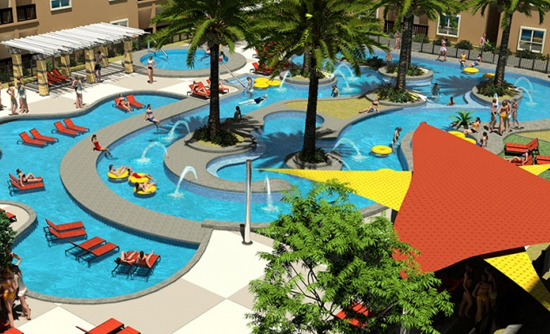
Over the last couple of years Tempe has seen a rebirth of its downtown development dreams.  Fueled by major tax-breaks (see also this) and a return (for now) of the housing boom, one large project after another has been announced downtown, from the 600 million dollar State Farm Insurance complex by the lake to the large corporate complex planned for Mill and University to the expanded and privatized high-end student housing (complete with lazy river -- only for sober use, naturally!), ASU and large development corporations have rediscovered their appetite for eating up the neighborhoods surrounding the university.  And, as we know from Iraq, for business to thrive, the population must be pacified.

Here's how the G.A.I.N. parties serve as the second prong of Tempe's counter-insurgency project.  First of all, the city needs to build a base of support within the community.  That means it needs to build direct support for the police and it has to get people together who are willing to work with them, and to then get those people talking to each other.  Remember the raffle?  Win a SWAT team appearance at your party!  Win a gang task force unit for your party!  Win a K9 unit for your party!  Indeed, personal appearances of various top cops were also promised.  The chief himself might come to your party, along with various commanders.


Trust me, nothing highlights the unique experience middle class whites have with police -- and their complete ignorance of that uniqueness -- than a room full of a hundred frothing white people cheering for a SWAT team to come to their bloc party.  The competition was fierce and palpable.  And the irony that the appearance of the cops at their city-sanctioned parties would look nothing like their appearance later in the night at non-official parties was completely lost on them.  And here's another interesting thing.  Watch Tempe's own promotional video for G.A.I.N.  Notice any cops?  It's presented as an entirely feel-good, neighborhood-oriented family affair, not a ravenous, authoritarian quasi-fascist open-air recruitment office.

Note in particular the appearance of Councilman Corey Woods.  Woods is happy to put himself out there as an enthusiastic advocate for G.A.I.N.  Indeed, Woods, Tempe's first black councilman, recently hosted a discussion at the Tempe Historical Museum on the African-American experience in Tempe, which focused in no small part on discrimination and life in segregated Arizona.  And as a candidate, Woods denounced previous threats from Arpaio to do patrols in Tempe, calling them "an exercise in chest-thumping and not an appropriate use of power."  Now, however, Woods has changed his tune, telling Channel 3 News that he now supports Arpaio's participation in the crackdown in Tempe saying, "The managing of the problem cannot fall solely on Tempe."

While these block parties pretend to be about getting neighbors out to meet each other as a form of crime prevention, they are very much about integrating that into the police structure.  So on one hand these police are engaging in a PR operation for themselves, but they are also actively recruiting snitches in the neighborhoods and gathering like-minded people (and dupes) together.  Many of these people think of themselves as community leaders (indeed, the cops referred to them as such at Monday's meeting), and serve on various neighborhood boards and governing bodies.


These willing and/or unknowing recruits will serve as the eyes and ears of the police on the ground, directing them towards people deemed disobedient or anti-social (not white, poor, counter-cultural, etc).  Loud music, unkempt front lawns, a rebellious attitude or a general nonconformism with the revitalized corporate face of downtown will get you singled out and squashed.  The G.A.I.N.ers will act like a collective all-seeing Eye of Sauron, staring down on the community from the Tempe Municipal Jumbotron between the two towers at W6, once dead but now reborn as the guardian of Tempe's new five year plan.

We've already reported on Tempe's plan for increased enforcement of code violations.  These attacks need to be seen together for what they are, an attempt to corporatize, domesticate and lame-ify downtown in the service of developers and the corporate university.  If they had their way, the city would bulldoze these neighborhoods tomorrow (and in a real sense they already are!) and replace them with high rises full of insurance agents, South Tempe style homes populated by the zoned out middle class, bars full of college well-discplined, high-spending sports fans, and white bread university students safely contained in their luxury condos and responsibly floating down the lazy river of life towards their bachelors degrees and mommy and daddy's approval.

If this isn't the fate that residents have in mind, time to act is running out, but it must involve a rejection of the faux community of the Tempe police and the construction of a real one in its place.  One with a tolerance for the kind of disobedience and raucousness that comes with life in a college town, or just life in general.  Lately some residents have been overheard, maybe only half-jokingly, fantasizing about the secession of South Tempe from downtown.  The sense is that people moved into these neighborhoods many years ago for a reason, and that if South Tempe is the future of downtown, then they want no part of it.

The recession gave everyone a brief reprieve, when the dead towers where W6 now stands stood like a skeletal reminder, a warning of just how close the neighborhoods came to obliteration.  The towers marked the spot where the beast was slain, or so many people thought. Judging by the way those South Tempe residents behaved in the G.A.I.N. meeting, not only do they have no idea what is happening up north, but they are too distracted getting pats on the head from the TPD to care.  The Tempe residents of Police Zone One may have only themselves to rely on if they want to beat back this most recent attack.

Thursday, August 8, 2013

COMPANIES SEEK PARTNERSHIPS WITH ADOT TO PROFIT ON FREEWAY, PART 1: THE NETWORKS

The plans crafted for a new Loop 202 extension, which would blast through South Mountain, have met steadfast opposition from Akimel O'odham and Pee-Posh residents in the Gila River Indian Community, as well as residents from the neighboring Phoenix village of Ahwatukee. The Loop 202 extension has been criticized as a commercial truck bypass scheme, while freeway supporters insist the freeway will bring housing and retail growth to the southwest valley and Gila River Indian Community.

An eruption of organizing against the freeway has taken place over the last year involving groups from across the valley who are not only opposing a freeway plan, but also a blueprint for more unsustainable urban growth into the Sonoran desert. A sampling of some of this activity: Gila River Against Loop 202 participated in ADOT freeway meetings and gave information on the tribe's "no build" option, the Akimel O'odham Youth Collective mobilized youth for demonstrations and gatherings, GRACE(Gila River Alliance for A Clean Environment) has filed a civil rights complaint against ADOT over the cultural impact of the destruction of South Mountain, the Ahwatukee based PARC (Protect Arizona's Resources and Children) is spreading anti-freeway information and planning legal opposition ,and the No South Mountain Freeway group holds informational meetings in Laveen and speak outs at freeway meetings organized by pro-freeway politicians.

A month back we reprinted an article from the Stop CANAMEX blog on the efforts of business interests and Arizona government, through Private-Public Partnerships (P3), to create a trade corridor through Arizona, and the plans for large scale urban growth and infrastructure projects.  The Stop CANAMEX blog has published the first part of a two part exposé on the public-private partnerships driving the latest alliance between developers and state transportation to secure the proposed Loop 202 extension.

We have reprinted the article with the author's permission.


Companies seek partnership with ADOT to profit on freeway, Part 1: The Networks 

A late July announcement from the South Mountain Development Group raised eyebrows amongst environmentalist and anti-freeway organizations across Arizona.  A group of three of the largest construction companies in the United Stated has proposed to fund and build the long contested Loop 202 extension through South Mountain.  Among those troubled by the announcement was the Sierra Club, who publicly opposed the freeway as an environmentally destructive project.

“Why did they wait to announce this until the day after the deadline for the comments on the freeway Draft Environmental Impact Statement?” asked Sandy Bahr of the Sierra Club.1 Now that the announcement has been made, the controversial public-private partnership model is likely to gain the attention it deserves. The attention may come a bit too late, however, due to the timing of this July 25th announcement in relation to the Draft Environmental Impact Statement (DEIS) comment period, despite the proposal being submitted a few months ago. Had news of the possibility of privately funded construction come out sooner, this new type of arrangement may have brought more critical comments.


A public-private partnership or P3 (or PPP) is essentially privatization, with perhaps a friendlier face. Projects that would normally be delivered by the state, such as transportation infrastructure like highways, are taken on by private companies. In cases such as this, private companies finance the project, build it, and they often operate and maintain it. Then they get their money back in addition to profits, of course. In a P3, the public sector has more control than in a privatization situation, but it also takes on most of the risk, meaning ultimately the money still comes from the tax payers via the state, even if it's a few decades down the road--especially since tolling is not part of this proposal for the proposed South Mountain extension to the 202.

Arizona has what is considered broad-enabling P3 legislation, which passed in 2009.2 Much effort has been in the works since then to move things in the direction of increased privatization. In fact there is a vast network of P3 promoters who have been pulling strings in Arizona. Unsurprisingly, some of these same P3 promoters are involved in the 202 proposal.

Going by the name South Mountain Development Group, the companies, Kiewit Development Co., Kiewit Infrastructure West Co., Sundt Construction, Inc. and Parsons Corporation submitted an unsolicited proposal to the Arizona Department of Transportation (ADOT) in February to build the Loop 202 extension. "Unsolicited," while technically correct, is a misleading term due to the longstanding relationships between public (such as ADOT) and private interests, and their pro-P3 organizations. You can see the push for P3s coming out of networks such as these:
  •  Sundt sponsored P3 conferences in Phoenix on several occasions, and attending at least one in 2010 was a representative from Kiewit, a representative from HDR (the engineering firm contracted to do the Environmental Impact Statement for Loop 202), and Gail Lewis of the P3 Office for ADOT as speakers.3
  • Kiewit is on the board of a pro-P3 organization called the Association for the Improvement of American Infrastructure (AIAI). According to their website, AIAI "is a non-profit organization formed in the District of Columbia to help shape the direction of the national Public Private Partnership marketplace."4

  • ADOT's John Halikowski is co-chair with Arizona-Mexico Commission's (AMC) Jim Kolbe in the newly founded Arizona organization called the Transportation and Trade Corridor Alliance (TTCA). The TTCA, which includes members of the Arizona Commerce Authority (ACA), was described as "heavily private-sector" by Gail Lewis, Director, ADOT Office of P3 Initiatives and International Affairs. AMC and ACA are also pro-P3 organizations with private and public membership.5 

  • Also a member of the TTCA, as well as the ACA, is Mary Peters, former Federal Highway Administrator for the U.S. Department of Transportation. She is also on the board of HDR. Participating with her in ACA is Doug Pruitt, former CEO of Sundt. 

  • A consulting firm, Tom Warne & Associates, lists Kiewit, Parsons, ADOT, HDR, and others as clients.6  Tom Warne writes a newsletter that regularly discusses P3s.  He was awarded as a the American Road & Transportation Builders Association (ARTBA) P3 Division Entrepreneur of the Year.  Mary Peters also won this award.7

  • HDR is a 2013 sponsor of the ARTBA Conference, at which Gail Lewis of ADOT recently spoke.  According to their website, "ARTBA approached the National Conference of State Legislatures (NCSL) to develop a toolkit to help educate lawmakers navigate the challenges of enacting and improving P3 enabling statutes."7

And there are yet more webs to untangle. The timing of the announcement of this new P3 may be related to HDR's involvement. HDR is the corporation that the Arizona Department of Transportation (ADOT) contracted to do the DEIS. HDR is an engineering and consulting firm which also happens to be a major proponent of P3s, claiming 35 years of experience delivering P3s and offering their expertise to others through their consulting services.8  HDR is part of The Transportation Transformation Group which "is an unprecedented alliance of state government, finance, academic and private industry leaders who aspire to transform American transportation policy into a goal-based arrangement that maximizes flexibility to enhance the roles of the state and local public sectors and their private partners to solve the growing problems of congestion and mobility." This group includes a variety of notorious financial institutions like Goldman Sachs, Citi, JP Morgan, etc.9

While ADOT has many consultants, HDR is likely to be a highly influential one. It is unclear whether it is the consultant referred to in the minutes of ADOT's Citizen's Transportation Oversight Committee meeting in 2011, but it certainly could be (Tom Warne and Associates is another possibility). "Gail Lewis, Director, ADOT Office of P3 Initiatives and International Affairs, provided an update concerning P3 projects and processes... ADOT’s Steering Committee has been helpful getting P3 integrated into the process. An outside consultant is helping to formulate, guide, evaluate and negotiate programs as they come forward."10

While there could be a conflict of interest, it is possible that HDR could put in a bid for a P3 to build Loop 202 extension as well. There is at least one other P3 in Colorado for which they put in a bid that Kiewit also put a competing bid in for.11 Alternatively, HDR may not have seen any value in the Loop 202 project, thus why they did such an incompetent job on the EIS.

Opponents of the Loop 202 extension have pointed out that the freeway is intended more as a truck bypass. Few Arizonans have even heard of the CANAMEX Corridor, the NAFTA trade route that runs from Mexico through Arizona and four other states to Alberta, Canada. It utilizes existing roads but in order to fulfill its purpose to move more merchandise between nations, it needs to grow much larger, involving more road construction including the proposed Interstate 11 between Phoenix and Las Vegas. While the Loop 202 isn't part of the current official CANAMEX route, it would certainly serve the freight and commercial truck traffic that comes through Phoenix. Tax payers are less likely to want to pay for something that isn't meant for the local community, particularly if it's done without their knowledge.

Steve Brittle of the local environmental non-profit Don't Waste Arizona, pointed out, among several issues of concern, that, "trucks originating in Mexico will be fueled with diesel that doesn't meet the CARB diesel standards adopted by Arizona over a decade ago. In Mexico, there is no regulation about the sulfur in diesel fuel. In Arizona, the law was changed to allow only diesel fuel to be sold that has had 98% of the sulfur removed." He writes that the state had this information, as well as the stats on how many trucks come in from Mexico. Yet these models of Mexican truck traffic were not considered in air quality models in the DEIS. ADOT and HDR also know that the purpose of the 202 extension is to facilitate trade traffic coming in from Mexico. Why did this not make its way into the DEIS, especially considering HDR's involvement in P3s and trade?

While the population growth projections in the DEIS may have been influenced by the anticipated megapolitan called the Sun Corridor resulting from increased CANAMEX trade, it wouldn't be useful to HDR and ADOT to discuss the negative impacts to health and the environment. Why is it so certain that they know about it? Again, HDR put together this DEIS, with Mary Peters on their board. Mary Peters is well aware of CANAMEX since she was part of the CANAMEX Corridor Coalition as ADOT Director. Tom Warne of the consulting firm for HDR, ADOT, Kiewit, etc. was also in the CANAMEX Corridor Coalition as UDOT Director at the same time.12 Worthy of mention is that Arizona Representative Russell Jones, who introduced P3 legislation, is on the Governor's CANAMEX Task Force and part of the Arizona-Mexico Commission (AMC). AMC is said to be the godfather of CANAMEX by Jim Kolbe, their CANAMEX expert.13

These officials have recently been building their careers on pro-P3 efforts as part of a plan to build trade infrastructure designed to benefit international corporations, not to accomplish goals for the quality of life for the local community. The various companies take an interest in this trade corridor for differing reasons.


The significance of the existing massive network of pro-p3 companies and organizations is that they see tremendous potential for profit so they have built relationships with people in the public sector (politicians and transportation and commerce officials) by providing those officials with the resources they need to accomplish the goals of the P3s. Financial institutions see profit opportunities; the various companies that do the actual design, construction, etc. see dollar signs; and public sector folks see possibilities for career advancement.

Why the Loop 202 South Mountain Freeway and why now? It's likely it has something to do with new federal legislation. "President Obama signed into law the “Moving Ahead for Progress in the 21st Century Act”, or MAP-21, July 6, 2012. It authorizes federal highway and transit investment through September 30, 2014 and provides a historic expansion of the Transportation Infrastructure Finance and Innovation Act (TIFIA) program as well as a number of other important policy reforms."14 Darwin Bondgraham writes, "The U.S. Department of Transportation... routinely grants Transportation Infrastructure Finance and Innovation Act (TIFIA) loans to P3 developers. TIFIA loans provide companies with much cheaper interest rates and more flexible terms than anything available in the private capital markets—again because the public subsidizes them."15  A hypothetical "South Mountain Toll Road" is listed among other examples of possible projects that could be funded with TIFIA, as seen on the USDOT Federal Highway Administration website.16

Private companies are salivating for grants and low interest rates on loans for public projects, but they also intend to get their money back and then some. An arrangement involving something called availability payments is an increasingly common way for P3s to make money for companies. They get paid back by the state after they've completed the project. "The ultimate source of project financing, then, is always the public, either through tolls or taxes. Why then allow private banks, drawing from private capital markets, to serve as intermediaries? Private financing simply permits the insertion of the financial interests of investment banks and private-equity funds into the long-term wealth-producing potential of public infrastructure. By allowing private investors to fund the construction of a project, the state allows these parties to impose their monopolistic claims on future flows of tax or toll revenues" [my emphasis].17 (This will be examined further in Part 2).

In reference to the TTCA, which clearly exists to facilitate CANAMEX infrastructural development, ADOT Director and chair of TTCA, John Halikowski stated, “Our job is not to lead the horse to water. Our job is not to make the horse drink. Our job is to make the horse thirsty.”18 This is a very telling quote that says a lot about the philosophy of at least one high-ranking Arizona transportation official. The citizens of Arizona, the horse in Halikowski's view, are not thirsty for massive transportation infrastructure, yet the goal of the TTCA is to sell us a story that convinces us that this is for our own good. But we see urban sprawl all around us. Empty subdivisions on the fringes of Maricopa County as one example. Arizona is a natural desert that does not need the increased development that private businesses hunger for. There are federal contracts and TIFIA loans that need to be awarded before September 30, 2014 and they are on a deadline, after all.

There are many reasons to oppose this freeway extension.  “The off-reservation alignment would gouge a 40-story high, 200-yard wide cut into South Mountain, which is sacred to all O’odham and Pee-Posh.”19 According to the Gila River Against Loop 202 website, the main concerns are public health, air quality, ground water, loss of land, and desecration of Muhadag Do’ag (aka South Mountain) and other sacred places.20

Opposition to the freeway is strong and justified whether or not it would involve private partners. The issue is whether the pro-P3 entities have the power to push this project, and what the consequences would be. Are the P3 arrangements and CANAMEX something the public knows about or even wants? Would this set a precedent for increasing privatization?


For more information: http://stopcanamex.blogspot.com
Check back for "Companies seek partnership with AZDOT to profit on freeway, Part 2: The Methods" on how the P3 companies will make their money if this is not a toll road.


Thanks to Gila River Against Loop 202 and Darwin Bondgraham for assistance and insight for this series.

Monday, June 24, 2013

Thirst in the Sun Corridor

As summer is now in full swing and much of the state prepares for the record breaking temperatures to come, it seems as good a time as any to examine what the future holds for valley residents. With Arizona in a drought for over 15 years, and climate models predicting an even hotter future, it seems like any more major urban growth for the Phoenix metro area could be disastrous for the regional eco-system.  So it is with some shock to see the plans for economic growth coming from state, civic, and business groups which call for massive urban expansion to develop central and southern Arizona into a regional economic bloc called the Sun Corridor.  The  Stop the CANAMEX Sun Corridor blog recently published an interesting article on the CANAMEX trade route, the Sun Corridor, and the push from  public-private partnerships to construct a megalopolis in southwest. We have reprinted the article with the author's permission.

Thirst in the Sun Corridor


It's often difficult to expose blatant manipulation on the part of business and state leaders whom you know have their own greedy agenda.  Imagine my surprise when Arizona Department of Transportation (ADOT) Director John Halikowski took an old proverbial phrase in a creepy direction.

In reference to the development, particularly in transportation infrastructure like more freeways in this megaregion-to-be in Arizona called the Sun Corridor, Halikowski stated, “Our job is not to lead the horse to water. Our job is not to make the horse drink. Our job is to make the horse thirsty.”

I remember when my father quoted the horse/water idiom to me as a child (If you're unfamiliar with it, it goes, "You can lead a horse to water, but you can't make him drink").  He was pointing out to me that he'd provided opportunities for me but at a certain point, if I didn't take that next step, that was on me.

To imply that it is one's job to make the horse thirsty can only be interpreted as manipulative.  If we were to take this literally, it could mean working the horse harder, depriving it of water, giving it a salt lick, etc.

The phrasing implies that the thirst is not there to begin with; that it has to be produced.  To be fair, most likely what Halikowski means is something a bit less malicious, such as enticing the horse with the promise of water, thereby making it realize, while salivating, how much it needed water all along.  The proverbial horse stands in for the Arizona public, but the water ironically stands in for something which will in the long run make the Arizona public thirsty and deprived of water.  The diminishing of water is only one of the several reasons to be concerned about further development of the Sun Corridor.

In the article, Transportation and Trade Corridor Alliance to Develop Strategic Roadmap, the horse idiom reference follows this paragraph: "Halikowski acknowledged that the challenge ahead is to make the public understand the need to invest in transportation infrastructure now to grow jobs and the economy in order to boost Arizona’s competitiveness in the global marketplace."  As it is, the funding is lacking and the steps needed to secure the funding will require support from the public, especially if it means toll roads.

The Transportation and Trade Corridor Alliance (TTCA) was instituted in early 2012 by Arizona Governor Jan Brewer.  According to a press release, "ADOT – in collaboration with the Arizona-Mexico Commission and the Arizona Commerce Authority – will bring together public and private sector partners to assess opportunities for Arizona to pursue investments in trade corridors such as the newly-designated Interstate 11, and to explore enhancements to border infrastructure. The Alliance will help identify how best to take advantage of the state’s current resources and guide future investment in a strategic way to increase the capacity of existing corridors – all with the ultimate goal of improving Arizona’s competitiveness in a global marketplace" (Source).  John McGee, Executive Director for Planning and Policy for ADOT said that the Interstate 11 can’t be built without a public-private partnership (P3), meaning that one of the most important pieces of the CANAMEX route in Arizona can’t happen without private investment, likely in the form of a toll road (Source).  Privatizing an infrastructural project such as this is something that will be hard to implement without the support of Arizona residents, therefore requiring some level of manipulation.

"Trade Corridor" undoubtedly refers to the CANAMEX trade corridor, which connects Canada, the United States including Arizona, and Mexico.  Its role is to facilitate the trade mandated by the North American Free Trade Agreement (NAFTA).  It utilizes existing roadways but seeks to improve transportation infrastructure for more efficient freight traffic.  The Interstate 11 is an example of a piece of CANAMEX that has become a priority for Arizona and Nevada.  The co-chairs are ADOT's Halikowski, and Jim Kolbe of the Arizona-Mexico Commission (AMC).  Kolbe, AMC's CANAMEX expert, credits AMC as the godfather of CANAMEX.  Significantly, all members of the five-person TTCA steering committee except Michael Hunter are heavily involved with AMC.  The AMC is a public-private partnership (P3) headed by Arizona Governor Brewer who placed Kolbe as co-chair of TTCA a few months after TTCA was instituted. 

According to the minutes the July 25, 2012 MAG meeting, “Gail Lewis, Director of the Office of P3 Initiatives and International Affairs of the Arizona Department of Transportation (ADOT), reported on the Arizona Transportation & Trade Corridor Alliance... Ms. Lewis stated that the Alliance is heavily private sector and includes representatives from APL, Avnet, UPS, BNSF, W. L. Gore, port authorities, growers and brokers, Mexican manufacturers, Arizona Trucking Association, Sky Harbor Airport, and several of the state’s councils of governments and metropolitan planning organizations" (my emphasis) (Source).

TTCA is also a P3, which means it involves both government officials and private business interests.  Public-private partnerships are playing an increasing role in politics and infrastructural development. One role of P3s in general is to seek to manufacture consent among the public in order to achieve the goals of private interests.  In this case, the horse, or the public, must be made thirsty for infrastructure with the promise of the jobs that are purported to accompany economic development (just like they promised with NAFTA).  P3s also seek to build on the partnerships between business and government in order to secure funding (e.g. investments that provide the businesses with profits) for their projects.  And of course if businesses see profit opportunities, the "needs" or thirst of the public may be created through these P3s. 

It is difficult to say what type of authority or sway TTCA can have, but it appears they may function a bit like the American Legislative Exchange Council (ALEC), another P3 exposed as having a major role in the collaboration between state law-makers and private prison industry leaders in the creation and passing of SB1070 and similar laws across the U.S.  Because CANAMEX is an international/national program largely pushed by AMC of which the Arizona Governor is head, it is impossible to extricate the private interests from government.

Opponents of the proposed Loop 202 extension, also known as the South Mountain Freeway, have pointed out, among various problems, that the route desired by pro-development folks would be used primarily as a truck bypass rather than something useful to Phoenix-area residents (Source).  It would serve as part of the transportation infrastructure that is required by the demands of the Sun Corridor.  While the Loop 202 extension is not part of the official CANAMEX route, it is part of the general Sun Corridor region, which is part of the CANAMEX vision.  It is clear that the role of the TTCA is to promote trade infrastructure. 


According to the Gila River Against Loop 202 website, the main concerns are health, air quality, ground water, loss of land, and desecration of Muhadag Do’ag (aka South Mountain) and other sacred places (Source).  The jobs alleged to come with the development are likely not to come, especially since CANAMEX (source) and other projects such as the Arizona-China Alliance (source) will continue the trend of U.S. jobs being exported to poorer countries.

How much does the public even know about the plans for massive infrastructural projects like CANAMEX?  Are Arizona residents aware of the "megalopolis" or "megapolitan" area being called the Sun Corridor, which would include Phoenix, Tucson, Prescott, and Nogales and could exceed 9 million people by 2040? (Source).  It is no wonder that the P3s involved with transportation and trade would realize they need to "make the horse thirsty".  Synonyms for thirsty include enthusiastic, eager, anxious, even zealous. Their angle is to entice us with economic opportunities such as jobs and growth, while most people understand that these trickle down economics will not actualize, and we will be thirsting not just for jobs but for the merely trickling water resultant of the development continuing in this direction.


See
Stop the CANAMEX Sun Corridor: Highway to hell? CANAMEX, Loop 202, and the Tar Sands

more on water and the Sun Corridor:
SHERIDAN, Thomas E. (U Arizona)
Aggregation and Abandonment?: The “Sun Corridor” and Arizona’s Water Game in the 21st Century (audio)

Tuesday, June 18, 2013

GPEC to out of state corporations: come to Arizona, exploit workers, make big profits!

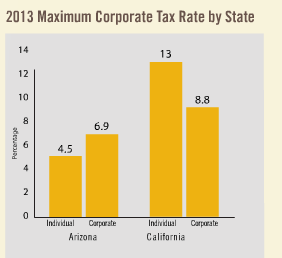
The webpage and PR magazine for the Greater Phoenix Economic Council's Arizona Sun Corridor Partnership (ASCP) essentially amounts to one big "screw you" to workers, enticing corporations to Arizona by arguing that Arizona workers receive scant protections at work and that corporations can expect to take large profits on their backs thanks to low personal and corporate tax rates.

The ASCP, essentially a who's who of corporate boosters pushing a massive region-wide and environmentally-destructive development project (which includes the idiotic Loop 202 expansion, recently ranked by the Sierra Club as one of the worst transportation projects in the US), lists several attributes that they see as arguing in favor of out of state businesses relocating to Arizona. They basically break down into two categories: (1) You can exploit your workers, and (2) You won't be taxed while you do it.


Just a few of GPEC's corporate partners, putting their seal of approval on GPEC's vision of high corporate profits and low worker protections.


While one of the seven bullet points listed under the heading "Expand or Relocate Your Business to the Arizona Sun Corridor" refers to the number of flights that out of state corporate execs can take as they zip in and out before and after exploiting Arizona workers, the rest clearly highlight the relative ease with which that exploitation will take place, as well as the low rate of taxation the corporations and their execs will get while pocketing their profits.
  • "Individual income taxes are 4.5% versus up to 13.3% in California
  • Corporate taxes are capped at 6.97% and decreasing to 4.9%
  • Workers compensation rates are almost half of those in California
  • We have the lowest unemployment insurance tax in the nation
  • Our unionization rate is up to four times lower than in California
  • We’re a Right to Work State"
The public relations magazine they put out comes with this handy graphic, in case you're the kind of greedy CEO that needs a visual demonstration of the relative scale of your rapaciousness.  Nice utilization of gold, by the way.  I'd have gone with blood red, myself, although now that I think of it, stacking skulls would have really gotten the point across, and given proper tribute to their fondness for the low workers compensation rates in Arizona (after all, with no protections at work, who can bring a suit against the boss?).


In the end, though, what the website and the glossy magazine show us is their ideal vision of the world.  One in which development, high profits and CEO pay come at the expense of workers, who get little or no protection on the job, little to no recourse when injured at work, and little to no protection from dislocation between jobs when some fatcat executive prefers taking profits over keeping you employed.  Hey, that private jet doesn't pay for itself, you know.  Welcome to the future.  Welcome to the Sun Corridor.

Sunday, June 2, 2013

Tempe city council pushes plan to domesticate and homogenize downtown neighborhoods

Anystreet, "South Tempe"

Anticipating the repulsion the millionaires that the City of Tempe hopes to attract to downtown will feel when looking down from their penthouses on the unruly backyards of the proletarian masses in downtown Tempe, the city has announced the results of a new study evaluating compliance with residential codes.  And, in these data and the new plan to bring the city up to standard, they provide a glimpse at the bland, suburban future they envision for what they are calling "North Tempe" (but which everyone else just calls Tempe).

This future can be viewed right now, in what they city government terms "South Tempe" (essentially the part of the city that most downtown residents consider Greater Chandler).  The new plan for turning downtown into a clone of its lawn-obsessed, bourgeois minivan driving, go-to-sleep-at-a-reasonable-hour-but-I-can't-sleep-with-all-that-noise southern sibling comes on the heals of recent efforts to turn down the volume on Mill Avenue and a crackdown on parties in the neighborhoods.

Tempe government is making big moves again after the collapse of the housing/condo market several years ago set their big dreams back, giving residents a respite from the relentless development and transformation of the downtown and surrounding neighborhoods.  For several years, the stalled, unfinished twin towers that now go by the yuppie-friendly monicker "W6" stood over the city like a skeletal reminder of the sinister future that had stalked residents, slain at the last moment but too large to drag away, so left to decompose in the town square as a warning to others.

They stood as a warning to the others.

But the beast is back now, and the city is considering deploying three new code enforcers to bring downtown in line with the South.  According to the tally of a recent survey of homes north and south of Baseline Road, the more conformist southern residents scored very nearly perfect ratings (surprise, surprise!), while the north fared noticeably worse.  Now the city hopes to use these new enforcers and their new approach to code compliance to impose "a positive, uniform appearance for residential properties across the community."  That is, to make downtown look more like the south.

In the city's press release, Councilman Kolby Granville declared ,“This is a historic step for Tempe in the way we look at residential code compliance. Our residents will be the beneficiaries when it comes to living in a community that has a more uniformly positive appearance.”

But -- and this is important -- when the city talks about "residents", they don't mean everyone, despite talking in such broad language.  And they don't even mean current residents.  What city planners and politicians have in mind is a virtual population of people not yet living in Tempe.  Aside from the developers and their money, this is their constituency.  It's a demographic more affluent than current residents, and less diverse.  It is a gentrifying settler population, uptight, law-biding, professional and upper class.  The kind that is attracted to a neighborhood and immediately sets about changing it, imposing their values on everyone people who already live there.

This new focus on code enforcement, noise reductions and party restrictions is their way of preparing the battlefield, pacifying the local population and domesticating the neighborhood for investors, yuppies and the second tier spoiled brat children of the wealthy who couldn't trade on mommy and daddy's legacy admissions and instead got the consolation prize of ASU out of state tuition and a new BMW convertible.

Neighborhood residents already avoid Mill Avenue like the plague.  If this transformation of downtown isn't going to sanitize the rest of the neighborhood and displace residents, it will mean standing up to maintain what's left of downtown's disheveled demeanor.  It will mean house parties, loud music and unkempt yards.  It's going to mean demanding that newcomers to the neighborhood come appreciating its general character, not seeking to control and dominate it, or to cooperate with the authorities who do.  It means that they can't come to Tempe expecting not to be kept up by loud music occasionally, or to not find red plastic party cups and empty cans in their yards from time to time.

If they don't want that, then maybe they should move south to Greater Chandler.