Showing posts with label corey woods. Show all posts

Thursday, February 20, 2014

Scumbag Tempe creates free public transit, criminalizes using it

Let's hearken back to 2007, shall we? Tempe was dreaming big.  Centerpoint Towers, now reborn as W6 after temporarily pooping out mid-development, was still in progress.  The twin towers steadily rose to unprecedented heights, along with the city's prospects, it was hoped.

So can this can be used arbitrarily? Yes.

And Tempe Mayor Hugh Hallman was championing the transformation of the city's public transit system to reflect its New Urbanist vision -- a city of easy transport and just as easy-to-get-to entertainment and work. Easy money, you might call it. The city envisioned an expansion of the existing free transit system, the Flash Forward and Back, into a neighborhood system. Small free buses would snake through the areas surrounding the university, delivering students and shoppers to various city destinations.
 
Quoted in an official city press release at the time, Mayor Hallman described the purpose of the free Orbit system in broad, inclusive terms.  Not only was the system meant to be a simple, green means of getting to work, it was also supposed to serve the old and disabled.  "Many residents — young, old, disabled or those simply desiring to reduce vehicle emissions — are in need of alternative transportation," he said.


So it might be surprising to know that a few weeks ago Tempe essentially made taking the city's neighborhood buses a crime for elderly and disabled people.  And probably poor people, too. And probably just about anybody that doesn't fit into the city's yuppie vision for the future. And not only that, the may have turned taking the bus into a potential Fourth Amendment nightmare.

On January 24, 2014, the city council passed a troubling expansion of the city's sidewalk sitting ordinance into the surrounding neighborhoods, effectively criminalizing sitting on the ground while waiting for the free bus. Given that the system utilizes a “flag” stop arrangement, meaning that residents and visitors can essentially wait for and wave down the bus anywhere along the circuitous route where it is reasonably safe for the bus to pick them up, this change in the law represents a dangerous expansion of the ability of police to harass and criminalize people using the system, or just hanging out in front of their own homes minding their own business.


The only no vote came from Councilman Kolby Granville, who questioned the broad language and potential arbitrary enforcement of the ordinance.

Before the vote, Granville questioned legal counsel, asking, "So if I was sitting on the sidewalk in front of my own house, conceivably, could I be violating this rule?" To which counsel responded in the affirmative.  Cops would use their discretion, came the reassuring response.  And when it comes to the police, we know what that means: it will be open season on the poor, people of color and mentally ill and other perceived undesirables.

The passage of the original Tempe sidewalk sitting ban was controversial at the time.  Starting in 1999, community members engaged in a series of protests against the law, and then local ASU graduate student (now a professor at Prescott College) Randall Amster challenged it in court. In an unusual move, the 9th Circuit Court, based out of San Francisco, took up the case and heard the case in Tempe, in a public forum at ASU. Sadly, the court upheld the law. Ironically, it went into effect on Martin Luther King Day.

Down and Drought contacted several city officials for comments on the new ordinance, including Councilman Corey Woods. As the only African-American council member, we were curious if he would have any concerns about potential profiling that may result from the law. In his response to us via Twitter, Woods said the city had considered the effect of similar laws in Phoenix and Mesa, and that their "analysis didn't show profiling happening in those cities."


We requested that data and followed up with Woods via email, who then put us in contact with Bill Amato, police legal advisor to the city. Amato didn't include any data in his response but reiterated the claim that the city had run a "best practices analysis with other jurisdictions that had similar language," and found no reason to suspect increased "4th Amendment or racial profiling claims."

The term Fourth Amendment claims refers to cops using the pretext of police contact made via enforcement of the sidewalk sitting ordinance as cause for a search, which otherwise wouldn't happen.  This troubles Granville, who told us via email that while he's not a legal expert on the question, 'I do not know if violation of the city code is considered to be "an arrest" subject to a search, or if it is something different.  However, my concern is that it may be.'


But after those initial comments, things get a little tricky. In his response, Amato reminds us that racial profiling and police harassment are not "ordinance specific," meaning that a police force that generally profiles is just as capable of profiling with any law at its disposal. Neither Phoenix nor Mesa have stellar records in this regard.

Readers may recall in 2010 when police assaulted and handcuffed Phoenix City Councilman Michael Johnson as he was checking on a neighbor whose house was on fire. Indeed, we here at Down and Drought broke a story last year involving a racist tweet from a Phoenix police officer. In 2012 a community group accused PPD of racial profiling during traffic stops. And a statewide review of traffic stops by DPS in 2008 by the ACLU revealed widespread bias in police stops in Arizona. And of course, many Tempe residents remember the Sgt. Schoville affair. And just recently we saw allegations that Tempe police offered protection to a frat that threw a racist party. So there is certainly cause for concern.

Criminals up to no good in Tempe?

So essentially Amato's message to us is that we should just trust the police, despite ample cause for skepticism. However, it seems even the city is having some second thoughts. Amato tells us, 'As one final note, staff will be bringing this ordinance back to Council to add some additional language. The proposed language will add additional safeguards by requiring the conduct to “unreasonably impede the right of way or cause a safety risk”.'


So, if there's no reason for concern, why the need for additional language to prevent the abuses they claim won't happen in the first place? It certainly begs the question as to why the ordinance is needed at all. Is this a solution looking for a problem? Or is this push for increased policing related to other standardization measures in North Tempe, such as increased enforcement of noise ordinances and yard codes?

To us, it looks like a part of a broader attempt by the city to domesticate the valuable downtown area, to make it safe for development and high end condo owners, and to enclose all social life in Tempe in one of three places: in city sanctioned mega events and the bars of Mill Avenue (where they can be taxed and policed), or quietly and meekly inside residents' homes. Our guess is that's exactly what this is, and that's another big reason all residents should oppose it.

To the sidewalks!

Tuesday, September 10, 2013

EVERYTHING TO G.A.I.N.: TEMPE'S TWO-PRONGED COUNTER-INSURGENCY STRATEGY IN DOWNTOWN


Guest contributor M.Arginal analyzes the ongoing and intensifying crackdown on downtown Tempe and how it fits into Tempe's overall development objectives.


File under: things that only happen in a room full of scared middle class white people.  Local cops struck their best gang member/rapper poses Monday night, complete with crossed arms and fake gang signs, at a "community" meeting boosting the city's G.A.I.N. block parties.  Meanwhile, about a hundred Tempe residents, members of local crime watches and various neighborhood groups hooted, hollered and foamed at the mouth hoping to win high profile visits to their hyper-local hootenannies by heavily-militarized local gang units and SWAT teams.  You know, fun for the whole family?

The Tempe PD raffled them off to lucky winners -- locals who have announced their plans to host local police-worshiping "get to know your neighbors" parties on October 26th.  This is the essence of the G.A.I.N. initiative, one prong of the city's counter-insurgency attack on the neighborhoods surrounding Tempe.  Masquerading as a "get to know your neighbor" block party, these function instead as propaganda ops for the cops and snitch farms to build support for the rapidly increasing development transforming Tempe.

This happens at the same time that the TPD Chief Ryff and notorious racial profiler Joe Arpaio announced MCSO participation in the fourth week of the other prong of the counter-insurgency strategy -- the boots on the ground swarming of the downtown Tempe with hundreds of cops enforcing petty alcohol crimes and setting up DUI sweeps.  Dubbed "Operation Safe and Sober", residents reported intersections blocked off by patrol cars and officers toting AR15s down neighborhood streets


The record-setting invasion, which Tempe officials claim is a response to "rowdyism", resulted over the last three weeks in almost 6000 police contacts and nearly 1400 arrests.  Police also broke up 129 parties, which they describe as "loud", although from what we're hearing from locals, the definition of "loud" and "party" has been stretched almost to the breaking point.  On a local neighborhood forum, one resident reported being raided by police exercising their new anti-party powers, although she asserted that her "party" consisted of only half a dozen people listening to music.  Other residents reported being hassled walking to the convenience store and home from the bar.

Tempe over the last year has been dealing with some high profile frat violence and fraternity-related partying.  In what some residents are now calling the "frat wars," frats and frat members have engaged in a series of assaults, general intimidation and reckless behavior in the neighborhood.  On April 28, a frat party descended into violence as shots were fired by an armed crew trying to settle a score following a fight earlier in the night.  In March two women were seriously burned at a frat party after a frat member threw alcohol in a fire pit.  Just two weekends ago, despite the Tempe police crackdown, two rival frats battled it out at the new District Apartment complex, leaving one fratboy beaten severely in a elevator.  This comes on the heels of a variety of other frat insanity, including alcohol related incidents that left one person dead and another nearly so.

ASU kicked the frats off campus last year, forcing them out into the neighborhoods, where they now rent homes and take over entire apartment complexes.  And this, in fact is the source of the problem.  A bunch of spoiled brat white kids, with powerful alumni parents, have colonized the neighborhoods surrounding the university, sowing entitled chaos wherever they go.  Interestingly, the frats meet every criteria for being a gang, and yet Tempe has not labeled them such, preferring instead to heap repression on the broader community, sending an invading force into neighborhoods long known for hosting non-frat house parties and dissident culture.  Are they too white and middle class to be considered a gang?


The scope of the Tempe's police response really comes into focus when taken in the context of Tempe's population of 160,000 people.  Six thousand contacts -- which could each involve more than one person --  means a significant portion of the population came into contact with the police, with 25% of them getting arrested as a result.  The sheer scale of the operation, and it's reliance on police contact, evokes comparisons to New York City's notoriously racist Stop & Frisk policy.  Although no numbers have been released detailing the racial breakdown of these stops, the TPD's uneven history in this regard and the newly announced participation of Joe's posse set off alarm bells.

It's worth remembering that in 2005 the Tempe Police were singled out by the city itself after years of criticism for its lack of diversity and for reflecting a culture of the "good ol' boy network."  Now throw on top of that the ongoing activities of the MCSO, recently found guilty by the Feds of racial profiling Latinos and you get the distinct feeling that walking down the street next weekend in Tempe is going to be a potentially dangerous experience if you happen to be a youth of color.


Indeed, things took a surreal "back to the future" turn Monday night when Tempe officers at the front of the room began mimicking rappers and gang members, tossing up mock gang signs, gesticulating wildly and striking exaggerated poses -- to the wild applause of the overwhelmingly white audience -- while announcing the winners of the G.A.I.N. gang unit raffle. It seemed buried in the ancient past as far as the G.A.I.N.-wannabes are concerned, but readers may remember the infamous "rap ticket" scandal, in which Chief Ryff was forced to apologize after Tempe Sgt. Chuck Schoville made two black men rap about littering on camera in order to get out of a ticket. 

Monday's meeting featured three main parts.  A couple "crime prevention" officers (begging the question of what the rest of TPD does) did an awkward presentation on how to keep from getting robbed.  Locking your doors and having small dogs featured prominently, but aside from the bizarre raffle, the meat and potatoes was a presentation about Tempe's new 311 snitch app.  Like Mesa's recently-debuted app, this downloadable program allows residents to anonymously (make sure to turn on the GPS location feature, though!) rat on neighbors and other anti-social elements.  Upload pictures of offenders and unsightly street art straight from your phone.  You, too can become part of the corporatization and blandification process in Tempe!  Every resident a gentrifying and a cop!


Which gets us to the heart of what is happening in Tempe: counter-insurgency.  As an American strategy, counter-insurgency has its roots in Vietnam and the period following the social upheavals of the 60's and 70's.  It returned in the 80's with the drug war as the police response to the crack epidemic and most recently, the US military's experience trying to dominate and pacify Iraq and Afghanistan.  The cross-pollination of US police forces with the military during the war of terror is well-documented, not just in terms of cross-training but also as a result of recruitment and the fact that many officers serve in reserve and national guard units.

Counter-insurgency relies on two main strategies.  First, disobedients must be isolated and attacked with state violence and coercion.  Secondly, bases of support for police need to be set up in the community.  With the ongoing police invasion of Tempe, ostensibly to crack down on partying, we have the first element.  With the G.A.I.N. parties, we have the second.


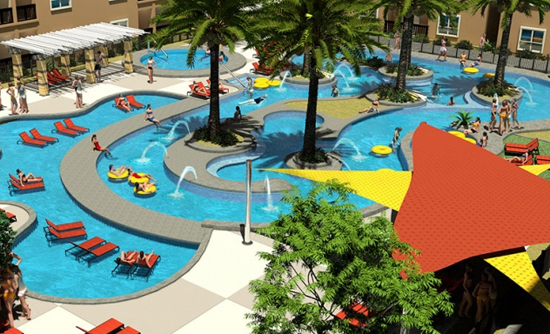
Over the last couple of years Tempe has seen a rebirth of its downtown development dreams.  Fueled by major tax-breaks (see also this) and a return (for now) of the housing boom, one large project after another has been announced downtown, from the 600 million dollar State Farm Insurance complex by the lake to the large corporate complex planned for Mill and University to the expanded and privatized high-end student housing (complete with lazy river -- only for sober use, naturally!), ASU and large development corporations have rediscovered their appetite for eating up the neighborhoods surrounding the university.  And, as we know from Iraq, for business to thrive, the population must be pacified.

Here's how the G.A.I.N. parties serve as the second prong of Tempe's counter-insurgency project.  First of all, the city needs to build a base of support within the community.  That means it needs to build direct support for the police and it has to get people together who are willing to work with them, and to then get those people talking to each other.  Remember the raffle?  Win a SWAT team appearance at your party!  Win a gang task force unit for your party!  Win a K9 unit for your party!  Indeed, personal appearances of various top cops were also promised.  The chief himself might come to your party, along with various commanders.


Trust me, nothing highlights the unique experience middle class whites have with police -- and their complete ignorance of that uniqueness -- than a room full of a hundred frothing white people cheering for a SWAT team to come to their bloc party.  The competition was fierce and palpable.  And the irony that the appearance of the cops at their city-sanctioned parties would look nothing like their appearance later in the night at non-official parties was completely lost on them.  And here's another interesting thing.  Watch Tempe's own promotional video for G.A.I.N.  Notice any cops?  It's presented as an entirely feel-good, neighborhood-oriented family affair, not a ravenous, authoritarian quasi-fascist open-air recruitment office.

Note in particular the appearance of Councilman Corey Woods.  Woods is happy to put himself out there as an enthusiastic advocate for G.A.I.N.  Indeed, Woods, Tempe's first black councilman, recently hosted a discussion at the Tempe Historical Museum on the African-American experience in Tempe, which focused in no small part on discrimination and life in segregated Arizona.  And as a candidate, Woods denounced previous threats from Arpaio to do patrols in Tempe, calling them "an exercise in chest-thumping and not an appropriate use of power."  Now, however, Woods has changed his tune, telling Channel 3 News that he now supports Arpaio's participation in the crackdown in Tempe saying, "The managing of the problem cannot fall solely on Tempe."

While these block parties pretend to be about getting neighbors out to meet each other as a form of crime prevention, they are very much about integrating that into the police structure.  So on one hand these police are engaging in a PR operation for themselves, but they are also actively recruiting snitches in the neighborhoods and gathering like-minded people (and dupes) together.  Many of these people think of themselves as community leaders (indeed, the cops referred to them as such at Monday's meeting), and serve on various neighborhood boards and governing bodies.


These willing and/or unknowing recruits will serve as the eyes and ears of the police on the ground, directing them towards people deemed disobedient or anti-social (not white, poor, counter-cultural, etc).  Loud music, unkempt front lawns, a rebellious attitude or a general nonconformism with the revitalized corporate face of downtown will get you singled out and squashed.  The G.A.I.N.ers will act like a collective all-seeing Eye of Sauron, staring down on the community from the Tempe Municipal Jumbotron between the two towers at W6, once dead but now reborn as the guardian of Tempe's new five year plan.

We've already reported on Tempe's plan for increased enforcement of code violations.  These attacks need to be seen together for what they are, an attempt to corporatize, domesticate and lame-ify downtown in the service of developers and the corporate university.  If they had their way, the city would bulldoze these neighborhoods tomorrow (and in a real sense they already are!) and replace them with high rises full of insurance agents, South Tempe style homes populated by the zoned out middle class, bars full of college well-discplined, high-spending sports fans, and white bread university students safely contained in their luxury condos and responsibly floating down the lazy river of life towards their bachelors degrees and mommy and daddy's approval.

If this isn't the fate that residents have in mind, time to act is running out, but it must involve a rejection of the faux community of the Tempe police and the construction of a real one in its place.  One with a tolerance for the kind of disobedience and raucousness that comes with life in a college town, or just life in general.  Lately some residents have been overheard, maybe only half-jokingly, fantasizing about the secession of South Tempe from downtown.  The sense is that people moved into these neighborhoods many years ago for a reason, and that if South Tempe is the future of downtown, then they want no part of it.

The recession gave everyone a brief reprieve, when the dead towers where W6 now stands stood like a skeletal reminder, a warning of just how close the neighborhoods came to obliteration.  The towers marked the spot where the beast was slain, or so many people thought. Judging by the way those South Tempe residents behaved in the G.A.I.N. meeting, not only do they have no idea what is happening up north, but they are too distracted getting pats on the head from the TPD to care.  The Tempe residents of Police Zone One may have only themselves to rely on if they want to beat back this most recent attack.